The Coat That Said Twelve
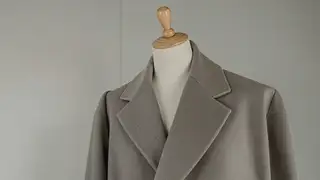
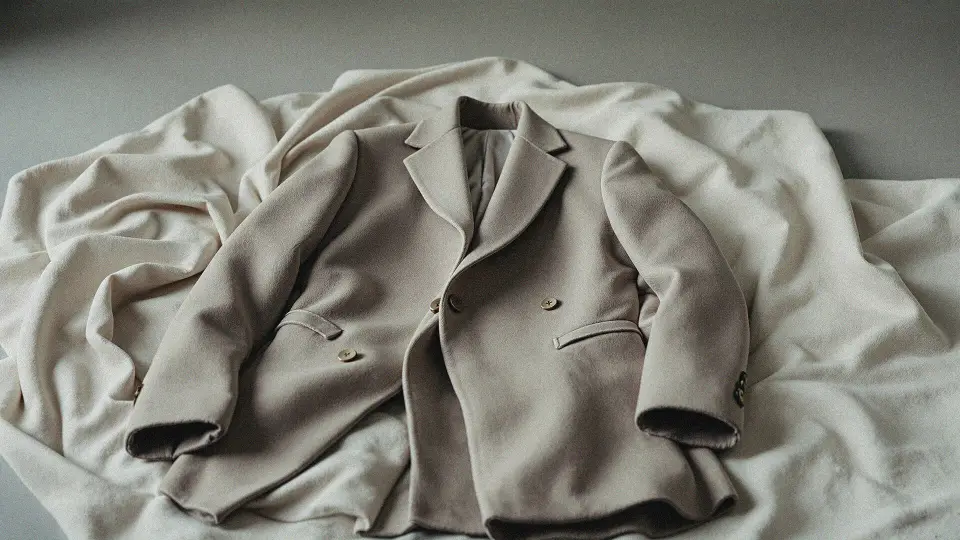
There is a wool coat from 1962 hanging in a hallway closet in Leeds. The label, stitched in navy thread on cream twill, says size 12. The woman who owns it wears a modern 8, sometimes a 6, and the coat fits her as if it had been cut to her shoulders.
She found this out by putting it on, not by reading the label. The label described a different body, measured by a different system, in a decade when the number meant something else entirely.
People who keep vintage clothes for long enough tend to arrive at the same small realization. The size printed inside a garment is a historical artifact, closer to a postmark than an instruction.
Why the Numbers Drifted
Women's sizing in the United States had no shared standard until 1958, when the Commercial Standard CS 215-58 assigned numbers to a set of body measurements drawn from a national survey taken almost two decades earlier. A size 12 then assumed a bust of roughly 32 inches. The standard was revised in 1970 and withdrawn in 1983, after which manufacturers were largely free to set their own scales.
Many of them chose to make the numbers smaller as bodies and markets changed. The practice has a name, vanity sizing, and its effect is cumulative. A dress labeled 14 in 1959 can sit closer to a contemporary 6 or 8, depending on the maker.
British and European sizing followed their own paths, with their own revisions. Menswear held steadier on paper, since collar, chest and waist are stated in inches or centimeters. Even so, the rise of a 1970s trouser and the armhole of a 1950s jacket assume a posture and a cut that the numbers alone cannot describe.
What the label leaves out
A vintage label records a moment. It says nothing of what happened after.
- Alterations. Seams let out or taken in, often visible as a faint line of old stitch holes or a shadow where fabric was folded for decades.
- Shrinkage and relaxation. Wool felts slightly with each wash, and knits stretch at the cuffs and hem until the original proportions are gone.
- Missing context. Some garments were made at home or by a local dressmaker, with a store label added later or never added at all.
What Documenting Looks Like
The people who keep the most precise records of their vintage clothes rarely started out meaning to. They started with one item that didn't fit as the label promised and decided to measure it instead.
The method that settles in is usually simple. The garment lies flat on a table, buttoned and smoothed, and a soft tape measures across it. The useful measurements are the ones that describe how the cloth actually meets a body.
Tops, jackets and coats
- Pit to pit: the width across the chest, from one underarm seam to the other, doubled for the full circumference.
- Shoulder: seam to seam across the back, which in older tailoring often runs narrower than modern cuts.
- Sleeve: from the shoulder seam to the cuff.
- Length: from the highest point of the shoulder, beside the collar, to the hem.
Trousers and skirts
- Waist: measured flat across and doubled.
- Rise: from the crotch seam to the top of the waistband, front and back. Mid-century trousers sit higher than most people expect.
- Hip: measured at the fullest point, usually seven or eight inches below the waist.
- Inseam and, for skirts, total length.
Alongside the numbers, careful keepers note the fiber content, whether the garment has any stretch, the type of closure, and how much seam allowance remains inside. A generous inch of folded fabric at a side seam means the garment can grow. A quarter inch means it cannot.
The Difference Between Body and Cloth
The figure that turns out to matter most is ease: the gap between a person's own measurements and the garment's. A blazer with a 40-inch chest on a 37-inch body fits one way. The same blazer on a 39-inch body fits like a different jacket.
Once someone has measured a few pieces they love wearing, a pattern appears. They learn that they like about three inches of ease in a jacket, two in a blouse, almost none at the waist of a skirt. That personal range becomes more reliable than any label, from any decade.
It also changes how new acquisitions arrive. A coat listed online at 21 inches pit to pit can be judged against a coat already in the closet that measures the same. Fewer garments come home only to be sent back or left on a hook, and the occasional expensive mistake, the dress bought for its color that never closed at the waist, becomes rarer. Those savings are real, though they matter less than the steadiness of knowing.
Where the Record Lives
Some people keep a notebook. Others tape a card inside the wardrobe door or pin a small tag to each hanger. The format matters less than its being kept somewhere it can be found again on an ordinary Tuesday.
Some keep the record in Vitrina, beside a photograph of the garment, so that the measurements, the fabric and the faint alteration line at the left seam sit together. Opening it shows not a list of things owned but a set of objects with specific shapes, each one known.
A good record also holds the history that can't be measured. It notes where the jacket came from, which aunt it belonged to, the year on the dry cleaner's tag still stapled inside the pocket. A dated tag, a union label, a particular zipper brand: these details help place a garment in time, and they are easy to forget once the coat has been worn through a winter.
Care follows from knowing
Measuring a garment closely tends to change how it is handled. A person who knows that a 1950s rayon blouse has an inch of chest to spare, and no more, washes it in cold water and dries it flat. Someone who has seen the old stitch lines in a pair of wool trousers understands what a tailor can and cannot do with them.
Vintage clothing has already survived decades of other people's habits. Documenting it is a way of continuing that record honestly, from the present owner's side.
A Size That Belongs to Someone
The woman with the 1962 coat still has not changed the label. It says 12, and she wears an 8, and both facts are true. She keeps the measurements on a card in the coat's inside pocket, written in pencil: 19 across the chest, 15 at the shoulder, 41 long.
The numbers describe nothing more than one coat and the one person it fits. Over time, a closet documented this way stops feeling like an archive of sizes that no longer mean anything. It becomes a collection of garments whose shapes are known, made for bodies across several decades and now worn by someone who understands each of them.