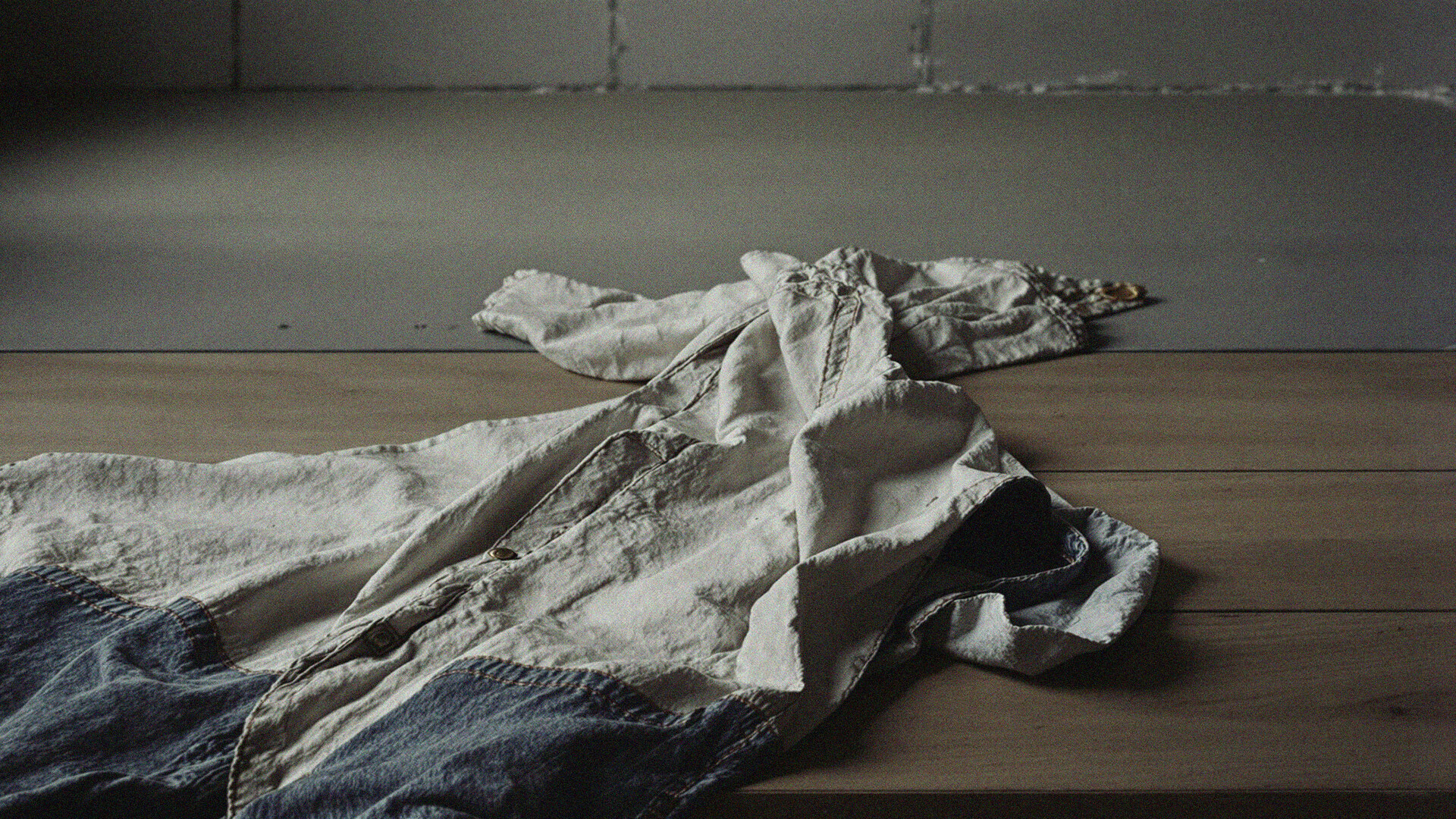
On a Tuesday in late October, the chair by the bedroom door holds a navy crewneck, a pair of olive trousers, and a grey overshirt. Some version of this outfit has lived on that chair since September. None of it was chosen with intention. It was simply what the hand reached for, three mornings running, while the brighter things on the rail waited.
Most people carry two palettes. One is the palette they think they wear: the rust cardigan, the striped Breton, the cobalt shirt bought for a wedding and admired ever since. The other is the palette that actually leaves the house. The distance between them is rarely large, but it is almost always there, and it says more about a wardrobe than any inventory does.
The palette in your head
Asked to describe their colors, most people answer from the shop window of memory. They name the pieces with stories attached, like the mustard coat or the green silk scarf from Lisbon. Those garments are real and they matter, but they are the highlights, not the record.
The record is quieter. It is made of the charcoal T-shirt worn under everything, the dark denim that goes with whatever is clean, the beige trench that has done four autumns without complaint. These colors rarely get named because they are not experienced as choices. They are experienced as getting dressed.
What a few weeks of noticing shows
When people begin noting what they wear, whether through a photo in the hallway mirror or a line in a notes app, the first surprise is usually how narrow the range is. Over thirty days, a closet holding forty or fifty colorful garments often produces a worn palette of four or five shades: navy, grey, an off-white, one brown, perhaps a muted green.
The second surprise is gentler. The narrow range is usually not a failure of nerve. It is a preference that has been running in the background, unannounced, for years.
Where the numbers sit
Somewhere around the second month, the figures stop being anecdotal. A pattern like this one is common:
- Roughly two thirds of wears fall within two or three neutral families.
- One accent color appears regularly, often a single shade carried across more than one garment.
- Several colors that take up real space on the rail appear once, or not at all.
Reading the palette without judging it
A worn palette is easy to mistake for a verdict. A grey-heavy month might reflect a season, a demanding project at work, or three weeks of rain. Accents often cluster around particular days: the oxblood loafers come out on Fridays, and the yellow knit appears on weekends with no plans.
People who keep watching for a full year tend to notice that the palette shifts with the light more than with mood. Darker, denser colors gather from November to February. In spring, the off-whites move forward and the navy steps back, without anyone deciding it should.
The accent that keeps returning
One of the more revealing findings is the recurring accent. It is rarely the color someone would claim as a favorite. More often it is a dusty teal or a faded brick, a shade that turns up in a scarf, then a pair of socks, then the lining of a jacket, with no plan behind any of it.
Once noticed, that accent explains a great deal. It is why the brick cardigan gets worn and the bright red one stays folded. It is the color that sits comfortably beside the neutrals already in steady rotation.
Seeing it laid out
The record works best when it is visual. A list reading "navy, navy, grey, navy, cream" is informative. A grid of the same outfits, side by side, shows something a list cannot: proportion, texture, how much of a month was one dark block with a pale collar at the top.
Vitrina is useful here in a plain way. It holds what you have worn as images rather than entries, so the palette assembles itself, much as a well-used floor shows where people actually walk. Nobody has to tally anything. The colors gather where they gather.
Some people keep it simpler still. A single photograph each morning, reviewed once a month on a laptop screen, does much of the same work. The method matters less than the habit of looking back.
What changes, and what stays
Knowing the real palette rarely leads to a purge. More often it leads to small, steady adjustments that barely register as decisions:
- The cobalt shirt stays, but now it is worn under the grey overshirt, where it finally makes sense.
- A second pair of the same dark trousers begins to seem obvious, and eventually arrives.
- The bright pieces that never leave the rail drift to the back, and mornings get a little quieter.
- Care follows attention. The cream knit that turns out to be worn every week gets washed by hand, dried flat, and folded rather than hung.
A palette as a description
Over time, the worn palette becomes less a set of data and more a portrait. Someone who wears charcoal and ivory with a faded rust has told you something about how they move through their days, how much they want to be noticed, and what they find restful to look at.
That portrait was always there. The record only makes it legible.
And there is a particular ease that follows. Standing at the rail on a dark Tuesday, a person can recognize every color in front of them: which ones they will reach for, and which ones are kept for reasons of their own. The closet stops being a question to answer each morning. It becomes something closer to a familiar room, where the light falls exactly where you expected it to.