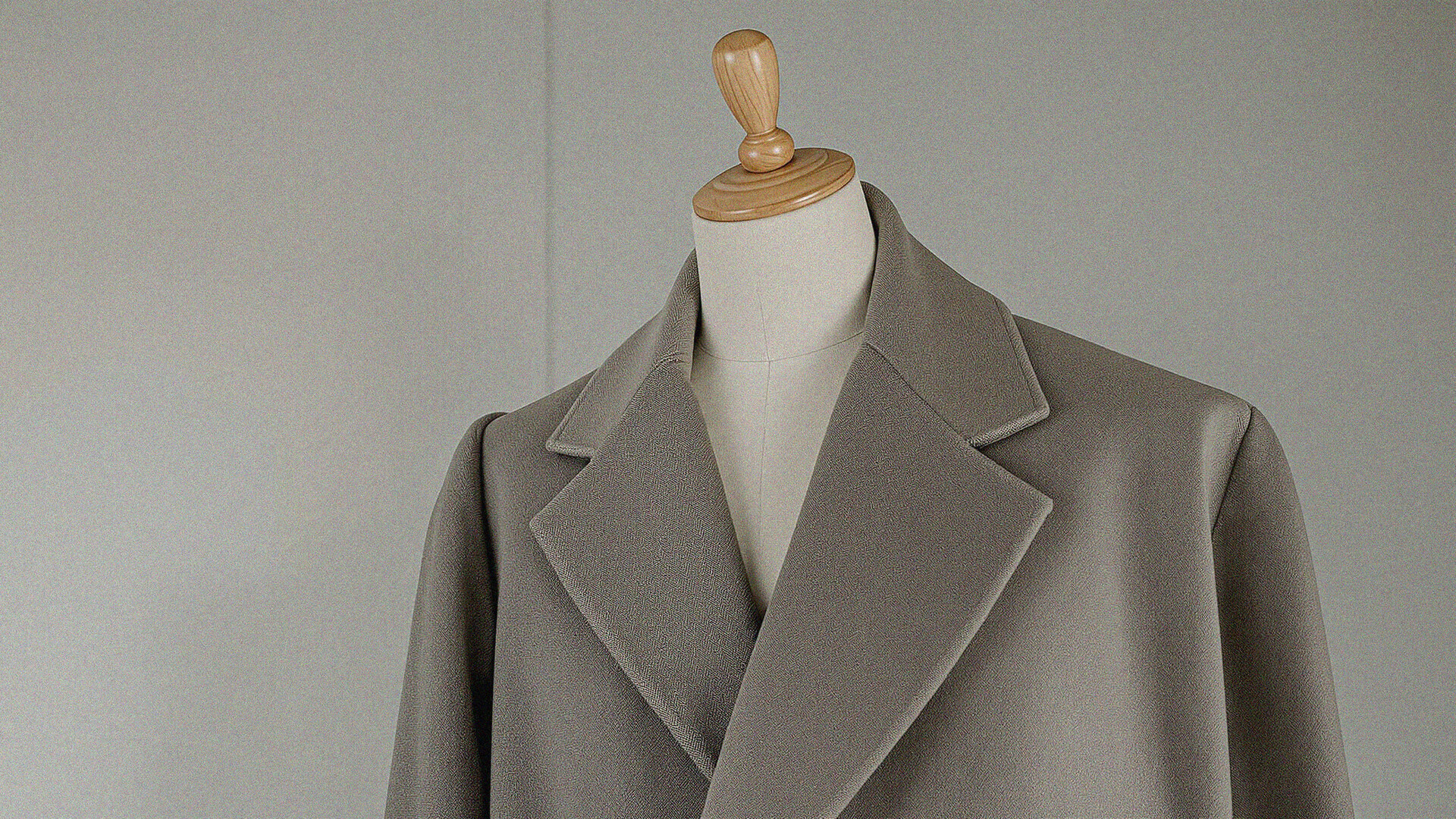
Most people can describe the outside of their favorite coat in detail: the weight of the wool, the color in different light, the way the collar sits. Few could say what the inside is made of. Fewer still could say whether that coat has a full lining, a half lining, or none at all. The lining is the part of a garment that touches us most and that we look at least.
The layer no one photographs
A lining sits between the body and the outer fabric, which the trade calls the shell. It is the first thing the arm meets when it slides into a sleeve and the last thing the shoulders feel when a jacket comes off. A photograph shows only the shell. So does a shop window. A wardrobe record usually shows only the shell too.
That record might be a spreadsheet, a notebook, an app, or simply the picture each person keeps in their head. It tends to list color, fabric, brand and season. It does not usually say that the navy blazer has a cupro lining that breathes, while the grey one has polyester that clings in a heated office. Yet that difference often decides which blazer gets worn on a long day.
What a lining actually does
A lining has several quiet jobs. It lets a jacket slide over a knit without catching. It protects the shell from the skin's oils and moisture. It hides the inner seams, and it helps a tailored garment keep its shape across years of wear. In winter coats, it also adds a layer of still air and some warmth.
The fiber shapes how each of those jobs feels. Linings have a small vocabulary of materials, and each one has its own character:
- Cupro, often sold under the name Bemberg, is regenerated from the fine fibers left on cotton seeds. It breathes, it does not build static, and it feels cool against the wrist. Good tailors tend to use it.
- Viscose breathes well and drapes softly. It can shrink when it gets wet, and it can pull a sleeve out of line after a careless wash.
- Acetate has a bright sheen and slides easily. It is less durable than it looks. Perspiration can weaken it at the underarms, and a hot iron can melt it.
- Polyester is strong and rarely tears. It does not breathe, and on a dry winter day it gives small electric shocks.
- Silk feels best of all and wears out first. It appears mostly in older or very expensive garments.
Full, half, unlined
Construction matters as much as fiber. A fully lined jacket covers the whole inside and gives a clean, structured shape. A half-lined jacket covers only the shoulders and upper back and leaves the lower body open. It is cooler, and it shows how carefully the inner seams were finished. An unlined jacket moves like a shirt and creases like one too.
People who wear tailoring through all four seasons usually know this without having to think about it. They reach for the half-lined linen jacket in July and the fully lined flannel in January, and their reason is the inside of the jacket, not the outside.
What a lining remembers
A lining records how a garment has been lived in more honestly than the shell does. It wears first, and it wears in a familiar pattern.
The armholes go first, where the arm turns thousands of times a season. Next come the pocket bags, worn thin by keys and coins. Then comes the back hem of a coat, which rubs on car seats and chair backs. A small tear at the underarm seam is often the first sign of a long relationship with a coat. It rarely means the coat is finished.
There is a simple proportion underneath all of this. A good wool shell can last twenty years or more. A lining often lasts eight to twelve. A tailor can replace a lining, and on a well-made coat the cost is a fraction of a new one. The coat then carries on for another decade. Seen that way, a worn lining is part of an ordinary life with a coat, like a resoled shoe. It is not a verdict.
When the inside is written down
When the lining sits in the wardrobe record next to the shell, a few things become visible that were hidden before.
Seasonal habits start to make sense. The jacket that always feels wrong in spring often turns out to have a heavy polyester lining. The sweater that never sits well under one particular coat may be catching on a dry acetate sleeve.
Care becomes specific instead of cautious. A wool trouser with a viscose lining at the knee tends to come out of a warm wash hanging crooked, because the lining shrinks and the shell does not. People who know that about a particular trouser simply wash it differently, the way one knows which stair in an old house creaks.
Wear is seen early. A note such as "lining fraying at left armhole, noticed November" means the tailor sees the coat before the split reaches the elbow. In Vitrina, that note lives on the same card as the photograph of the coat. The inside and the outside of the garment then exist together, as they do in real life.
Buying also changes, quietly. People who have recorded their linings for a while tend to turn a new jacket inside out in the shop before they try it on. They look for cupro or a clean half lining. They do this because they already know, from their own wardrobe, which garments they keep reaching for and why.
Care, read through the lining
The lining often sets the terms of care more strictly than the shell does. Many "dry clean only" labels exist because of the lining. The wool or cotton outside could tolerate gentle water, but the acetate inside could not.
Owners who know this live with their garments a little differently. They brush a coat after wear and hang it on a wide wooden hanger, so the shoulders of the lining keep their shape. They let a jacket rest for a day after a warm evening while the lining dries. They notice the first loose stitch at a vent and close it with a needle the same week.
None of this is a system. It is the ordinary attention of someone who knows what they own all the way through.
The other side of the cloth
There is a moment, familiar to anyone who has kept a good coat for a long time, when they put it on without thinking and the sleeve slides through cleanly. The lining is new, or newly mended. The coat feels the way it did the first winter, and perhaps better, because now it fits a body it has known for years.
That moment does not come from the shell. It comes from the part nobody photographs, which was noticed, written down, and looked after in time. A wardrobe known this well, inside as well as outside, stops being a collection of surfaces. It becomes a set of things each person has truly lived with.