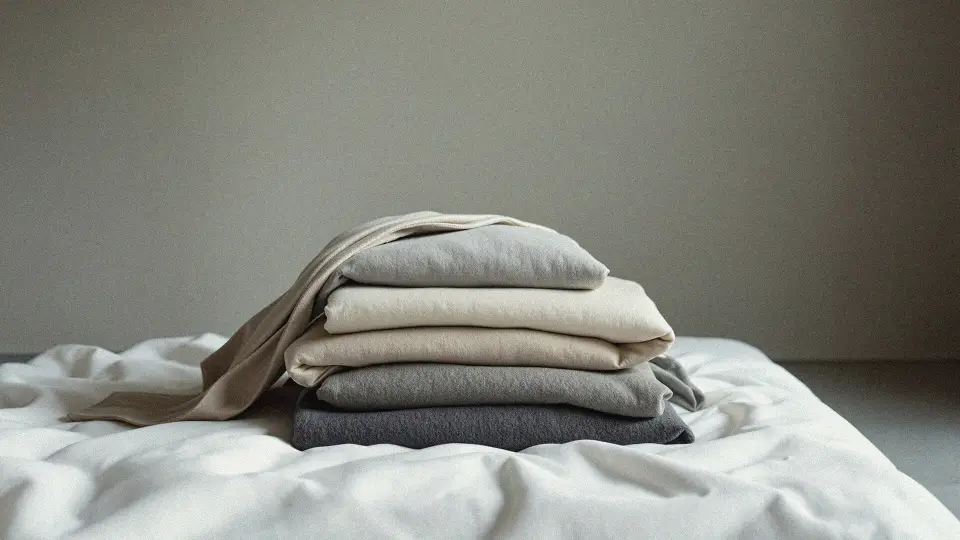
The first properly cold morning rarely announces itself. The window looks the same as it did yesterday, but the floor is colder under bare feet, and the coat that hung by the door all October suddenly feels thin. Somewhere between the kettle and the front step, the season changes. Most of us respond the same way: we open the wardrobe and find far more than we need, and very little that answers the question the weather is asking.
Why twelve, and how they were counted
A winter capsule wardrobe is less a rule than a way of noticing which clothes actually carry you through the dark months. Twelve is enough to dress for an office, a weekend, a dinner and a wet walk without repeating an outfit too obviously. It is also few enough to hold in your head at once.
The count used here breaks down simply:
Outerwear, two. Knitwear, three. Tops, two. Bottoms, three. Footwear, two.
Scarf, hat and gloves sit outside the count. They matter, but they behave more like weather than clothing: you add them when the morning asks and take them off at the door. The same twelve can begin as a fall capsule wardrobe in late September, with the heavier knit and the parka waiting, and stretch into January by adding layers.
Why fabric matters more in the cold
In summer, a garment only has to sit well on its own. In winter, almost nothing is worn alone. A shirt goes under a sweater, the sweater goes under a coat, and the whole stack has to move without bunching, trap warmth without trapping damp, and come off cleanly in an overheated room.
This is where fabric does the quiet work. Wool keeps its warmth when it gets a little wet, and it resists odour well enough to be worn several times between washes. Merino is the finer, softer version, thin enough to sit under a shirt collar without bulk. Brushed or heavy cotton works for the layer closest to the skin: substantial enough to hold its shape, soft enough to wear all day. And footwear in winter comes down to one plain question: does the leather keep water out? Either the boot is built to be waterproof, or it has been treated well and kept that way.
People who have dressed this way for a few winters tend to stop thinking in terms of outfits. They think in layers that agree with each other.
The twelve pieces
What follows is the full set of winter wardrobe essentials in this capsule, with what each one is for and what it gets along with.
- Wool overcoat. The dressier of the two coats, for offices, evenings and dry cold. A dense wool or wool blend, cut long enough to cover a blazer-length layer, with room in the shoulder for a thick knit. Pairs with the wool trousers, the rollneck and the leather lace-ups.
- Waterproof parka or quilted jacket. For rain, sleet and long days outdoors. A treated or waterproof shell, a hood that stays up in wind, and pockets placed where hands naturally go. Pairs with the jeans, the cords and the boots.
- Fine merino crewneck. The everyday layer, worn alone or under a coat. A smooth knit that sits flat under a shirt collar. Pairs with nearly everything, especially the oxford shirt and the wool trousers.
- Chunky wool rollneck. The warmest knit, for the coldest weeks. A heavier gauge with a collar that folds without sagging. Pairs with the jeans, the overcoat and the boots.
- Wool or wool-blend cardigan. The layer that comes on and off indoors. Look for buttons that sit flat and a length that ends at the hip. Pairs with the flannel shirt, the cords and the heavy tee.
- Heavyweight cotton long-sleeve tee. The base under everything. A dense jersey that holds its neckline after washing. Pairs with the cardigan, the rollneck when it is open at the collar, and the jeans.
- Brushed flannel or oxford shirt. The top that makes a knit look considered. Soft brushed cotton or a sturdy oxford weave, collar firm enough to sit above a crewneck. Pairs with the merino, the cardigan and any of the trousers.
- Dark wool trousers. The most formal of the bottoms. A flannel or worsted wool with a clean drape and enough weight not to cling. Pairs with the overcoat, the merino and the lace-ups.
- Dark straight-leg jeans. The weekday and weekend constant. A heavier denim that softens with wear rather than thinning. Pairs with the rollneck, the parka and the boots.
- Corduroy trousers. Somewhere between the jeans and the wool. A medium or wide wale in a muted colour. Pairs with the cardigan, the flannel shirt and either pair of shoes.
- Waterproof leather boots. For wet pavements and slush. A sealed or well-treated upper, a rubber sole with real grip, a shaft high enough to clear a puddle. Pairs with the jeans, the cords and the parka.
- Leather lace-ups with a rubber sole. The cleaner shoe, for offices and dinners on dry days. Smooth leather, a slightly thicker sole than a summer shoe. Pairs with the wool trousers and the overcoat.
How the twelve combine
A 12 piece capsule wardrobe proves itself in combination. Four arrangements cover most of what a winter week asks for.
The office in early winter
Wool trousers, oxford shirt, merino crewneck, overcoat, lace-ups. Quiet and finished, and the merino comes off at the desk without leaving the shirt creased.
The Saturday market
Jeans, heavy tee, chunky rollneck, parka, boots. Warm enough to stand still for an hour, practical enough to carry bags home in the rain.
Dinner out
Cords, flannel shirt, cardigan, overcoat, lace-ups. Softer than the office version, but still dressed. The cardigan reads as deliberate rather than casual when the shirt collar sits neatly above it.
The long walk
Jeans, flannel shirt, rollneck over it, parka, boots. Three layers under a shell, each one removable as the body warms up.
Once these four are familiar, the rest tend to assemble themselves. The merino goes with the cords on a quiet Tuesday; the cardigan goes over the tee at home on Sunday.
What happens to the rest of the closet
The linen shirts, the sandals and the light cotton trousers do not need to share space with the winter set. Folded into a breathable box or moved to a high shelf, they stay out of the morning decision entirely. Many people find the wardrobe feels larger with fewer things in it.
It helps to see the whole closet once before putting anything away. A tool like Vitrina is useful at this stage, simply as a way of looking at everything you own in one place and recognising which coats and knits you actually reach for.
One or two favourites can stay outside the capsule. A patterned sweater that only comes out in December, a velvet jacket for one particular dinner. These are not exceptions to the system; they are the reason it feels like yours.
Care through the season
Wool asks for very little. After a day's wear, a sweater hung over a chair back or laid flat near an open window loses most of its odour overnight. Washing it far less often than cotton is part of what keeps it soft.
Boots last longer when they rest. Alternating the boots and the lace-ups gives the leather a day to dry fully, and a pair of cedar shoe trees holds the shape while it does. Salt marks lift with a damp cloth if they are caught the same evening.
Coats benefit from a proper hanger with wide shoulders and a brush along the grain before they go back on the rail.
By February, the twelve will have been worn so many times that dressing takes the length of a single thought. The cold is still there at the window. But the wardrobe has stopped being a question, and the first minutes of the day belong to something else.