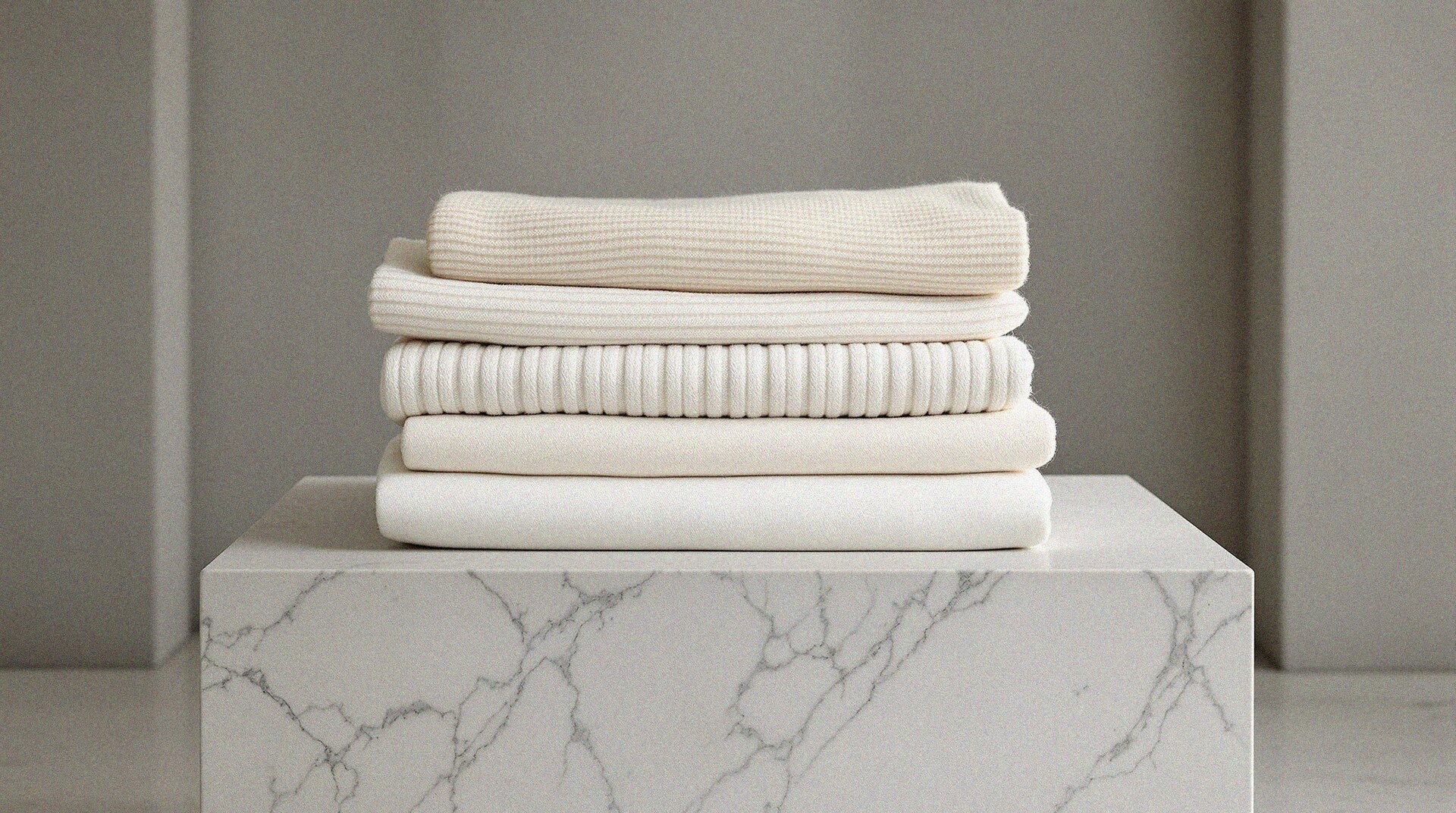
We tend to think of fabric care as something extra — a hobby for people with too much time, or a chore reserved for special pieces. It is neither. For linen, wool, and silk specifically, care is the work that turns a buying decision into a long-term return.
Why these three reward care the most
Cotton is forgiving. Synthetics are nearly indestructible until they pill. Linen, wool, and silk sit in the opposite category: they are protein and cellulose fibers with structure, memory, and a strong response to how they are handled. Done right, they last fifteen years. Done badly, they lose shape and shine within a season.
These are also the three fibers where the price-to-care ratio works most clearly in your favor. A €180 linen shirt cared for properly costs you under €3 per wear over five summers. The same shirt washed hot, tumble-dried, and ironed at the wrong setting is shot in eighteen months.
Linen: stop overthinking it
Linen is the easiest of the three to live with and the easiest to ruin out of nervousness. The instinct is to treat it like silk. It does not need that.
Wash linen in cool to lukewarm water on a normal cycle with a mild liquid detergent. Skip fabric softener — it coats the fibers and dulls the natural sheen over time. The famous wrinkles are the point; if you iron linen, do it slightly damp on a hot setting, and stop trying to get the fabric flat. Steam is friendlier than iron pressure.
Dry linen flat or on a wide wooden hanger, away from direct sun. Heat from tumble dryers is what shortens linen's life — it shrinks the weave and makes the hand stiff. Air drying is faster than people expect, and the slight wrinkle that sets while drying is the relaxed drape you paid for.
Store linen folded, not hanging. Long-term hanging stretches the shoulders out of shape, which a few seasons of wear cannot undo.
Wool: less washing, more airing
Most wool is washed too often. A jumper worn over a base layer needs washing two or three times a season, not after every wear. Between wears, hang it in fresh air for a few hours. Wool fibers self-clean — they release odors and minor surface dirt when allowed to breathe.
When you do wash, choose between two paths. Hand-wash in cool water with a wool-specific or no-rinse detergent like Eucalan, soak for fifteen minutes, press the water out without wringing, and dry flat on a towel. Or use the machine's wool program with the same detergent if your machine has a true cold cycle that does not agitate.
Never tumble-dry wool. Heat and tumbling are what felts the fibers — that irreversible shrinkage and stiffness that ends a sweater's life. Dry flat, in shape, away from radiators.
Store wool folded. Hanging knitwear stretches the shoulders into points within a season. For long storage, fold with cedar blocks or lavender sachets rather than mothballs. Moths target dirty wool — wash before you put anything away for the summer, even pieces that look clean.
For coats and tailored wool jackets, a good wide-shoulder hanger is non-negotiable. Wire hangers from the dry cleaner are not a hanger; they are a slow way to ruin the shoulder line you bought the coat for.
Silk: the rules are short
Silk has a reputation for being precious. The actual care list is short, but the rules are non-negotiable.
Hand-wash in cool water with a silk-specific or pH-neutral detergent. Most labels say dry-clean only because that is the safest legal instruction for the brand, not because silk cannot tolerate water. The exceptions are heavily embellished pieces, suiting silks with structured interfacing, and prints where dye stability is unknown. When in doubt, test a hidden seam.
Soak for five minutes, swirl gently, rinse twice, and roll in a towel to remove water — never wring. Hang on a padded hanger to dry, away from sun and direct heat. Sunlight fades silk faster than any other natural fiber.
Iron silk on the silk setting, inside-out, while still slightly damp. A press cloth is safer than direct contact for darker colors. Steam is gentler than iron pressure for most pieces and does not flatten the texture.
Store silk hanging on padded hangers or folded with acid-free tissue paper between layers. Avoid plastic garment bags for long storage — silk needs to breathe.
The dry-cleaning question
Dry cleaning has a place. Tailored wool coats, structured silk dresses, and anything with construction you cannot replicate at home benefit from professional care. Everything else does not.
Frequent dry cleaning is the most common reason quality knits and shirts lose their hand. The solvents degrade natural fibers over time, and the pressing flattens texture that was built into the weave. As a rule, dry clean when something needs it — a stain you cannot lift, a structured piece at the end of a season — not on a schedule.
What this looks like as a habit
The cost of doing this well is small once it becomes routine. A bottle of wool wash, a few padded hangers, cedar blocks, a steamer, and a small drying rack. The total investment is under a hundred euros and lasts years.
The time cost is also lower than it sounds. Most wool and silk live longer with less washing, not more. The actual work happens once a season — putting things away properly — and once a week for the few items that need hand-washing.
What you are buying with this work is the right to make the cost-per-wear math come out in your favor. A wardrobe built around linen, wool, and silk only earns its keep when the pieces last. Care is what makes that possible. Treat it as part of the purchase, and the math works.