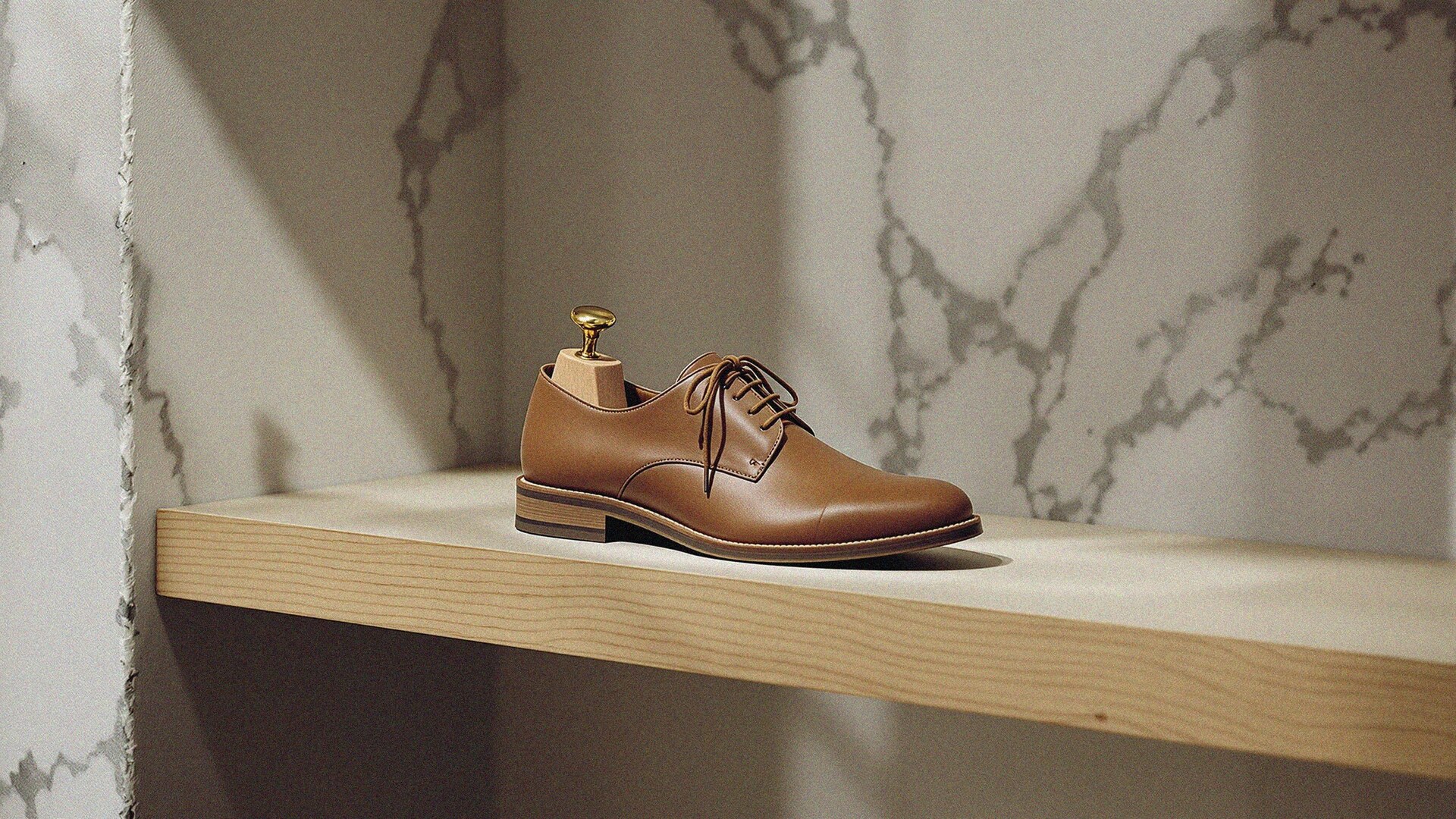
The heel counter softens. The toe box, once round and certain, sinks toward the floor. A diagonal crease runs across the vamp where your foot bent a thousand times, and one morning you notice the leather has folded there for good — a small permanent wrinkle, like a line on a face.
Most shoes don't wear out from walking. They lose their shape from the sixteen hours a day they spend doing nothing.
What a shoe is actually holding
A leather shoe is a structure under quiet tension. The upper is stretched over a last during making, the shape held by that curve, and once it leaves the factory the shoe spends the rest of its life slowly relaxing out of it.
Your foot keeps it honest while you wear it. Sweat softens the lining, warmth makes the leather pliable, and your weight presses everything back into place. Then the shoe comes off, and all of that stops at once.
The damp leather cools bent. Whatever crease it was holding at the moment you stepped out, it keeps.
This is why the first ten minutes after a shoe comes off matter more than anything done later. The leather is warm and wet and willing. Left in a heap by the door, it dries into a heap.
The gap between wearings
The oldest trick is still the best one, and it costs nothing but patience.
Rotation. A leather shoe worn hard needs about a day to dry fully — the moisture from a single day's wear sits deep in the lining and the insole, well past what you can feel with a finger. A pair worn two days running is still damp underfoot on the second, and damp leather stretches and creases far more easily than dry.
Two pairs alternated will each outlast two pairs worn to death in sequence, and it isn't close. When people keep three or four pairs in genuine rotation, they tend to stop thinking about shoes wearing out at all. The shoes simply age instead.
The trouble is that rotation only works when you can see what you own. A rack by the door shows three pairs; the other seven live in boxes on a high shelf, out of mind, quietly not being worn. This is the small blindness a wardrobe accumulates — things you own but no longer picture. Cataloguing a closet in something like Vitrina tends to surface exactly these: the two pairs you forgot were in rotation, now doing all the work for the ones you reach for on instinct.
Trees, paper, and the shape of the toe
Cedar shoe trees do two jobs, and the second is the one people miss.
They hold the toe box and vamp in shape while the leather dries, pressing out the day's creases before they set. And the raw cedar draws moisture out of the lining and takes the smell with it. A wooden tree with a spring-loaded heel, slipped in while the shoe is still warm, is the single most useful thing that goes inside a shoe.
- Cedar, unvarnished — the point is the wood absorbing damp, and a lacquered tree does nothing but hold shape.
- A close fit to the last — a tree too small rattles and does nothing; too large over-stretches the toe. Sized trees, bought for the shoe, beat the sprung universal kind.
- In within the hour — the leather sets as it cools, so the tree wants to be there while it's still pliable.
Sneakers and canvas ask for the paper approach too. There's no leather to feed, only a soft toe that caves — a ball of tissue or a rolled sock keeps the front standing until the next wear.
Where they sit the rest of the time
Heat and dryness are what age stored leather. A shoe left on a radiator or in direct sun through a window dries brittle from the outside, and the surface cracks along exactly the creases the tree was meant to smooth.
A cool shelf, out of direct light, with air around each pair. Leather is skin, and skin left sealed in a plastic box in a warm cupboard grows mould. The original shoe box with the lid off, or an open shelf, lets the leather breathe.
Boots have their own failure, and it's the ankle. Tall unstructured boots fold at the ankle under their own weight and crease there permanently, a slump no polish undoes. A boot tree, a rolled magazine, or even a wine bottle stood inside the leg keeps the shaft upright through the months they sit unworn.
The winter boots that go away in spring want a real cleaning first — the salt line dries leather out over a still summer, and it's already faded by autumn. Clean, conditioned, trees in, boxed with the lid loose. What goes away in good shape comes back in good shape.
The relationship, not the maintenance
A shoe kept in shape for years has a particular quality. The leather has darkened where a hand grips it to pull it on. The creases sit soft and shallow, worn in rather than broken, and the toe still holds its round.
None of this is difficult, and none of it is really about preservation. It's a way of paying attention to the things that carry you around — noticing the warmth still in the leather as they slip off, giving them the hour they need before they're asked to hold your weight again tomorrow.
Shoes kept this way stop being something you replace. They become something you have.