It is a little after seven, and the light through the bedroom window is the flat grey of early November. A charcoal trouser hangs over the chair where it was left on Sunday. Her hand goes to the black turtleneck before she has fully decided anything, and then to the ankle boots by the door. The whole choice takes less time than the kettle. Nothing in the outfit is new. She has worn each piece dozens of times, and that familiarity is exactly why the choice is so quick.
Most capsule wardrobe outfit ideas fail on a practical point: they show the outfits without showing the closet behind them. What follows works the other way around. It begins with one fixed set of fifteen everyday garments and builds every outfit from those alone. Nothing is borrowed from outside the set, and nothing appears only once in a photograph.
The fifteen pieces
The set has five groups.
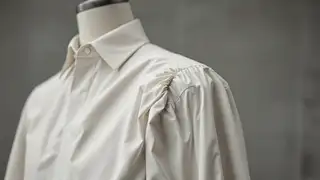
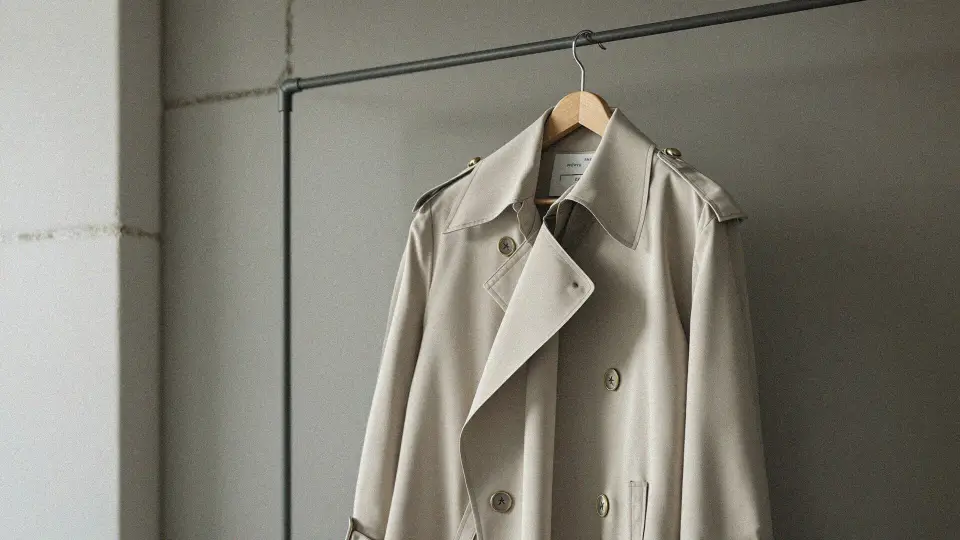
There are two outer layers: a camel trench coat and a navy unstructured blazer. There are five tops: a white button-up shirt, a striped long-sleeve tee, a plain white tee, a grey crewneck sweater and a black fine-knit turtleneck.
There are four bottoms: dark straight jeans, charcoal tailored trousers, olive chinos and a pleated midi skirt. There are three pairs of shoes: white leather sneakers, brown leather loafers and black ankle boots. The last piece is a single accessory, a mid-weight scarf in a neutral tone.
None of these garments is unusual. Most people who have been dressing themselves for a decade own close relatives of at least half of them. That ordinariness is the point. A mix and match wardrobe rarely depends on rare garments. It depends on how readily ordinary garments work with each other.
Ten capsule wardrobe outfits from one set
The ten outfit formulas below each use a top, a bottom and a pair of shoes from the list, with layers and the scarf added where the day calls for them. Each combination appears only once.
- The weekday standard: white button-up shirt, dark straight jeans, brown leather loafers, navy unstructured blazer. For an ordinary office day that might turn into a meeting without warning.
- The quiet meeting: black fine-knit turtleneck, charcoal tailored trousers, black ankle boots, camel trench coat. For days when looking composed matters more than looking interesting.
- The Saturday errand: striped long-sleeve tee, olive chinos, white leather sneakers. For the market, the hardware shop, a slow walk with coffee.
- Skirt and knit: grey crewneck sweater, pleated midi skirt, black ankle boots, neutral scarf. For a cool afternoon when trousers feel like too much of a uniform.
- The warm-weather minimum: plain white tee, pleated midi skirt, white leather sneakers. For hot days when the skirt's movement does most of the work.
- The evening out: black fine-knit turtleneck, dark straight jeans, black ankle boots, navy unstructured blazer. For dinner somewhere with low lighting and no dress code.
- The rainy commute: white button-up shirt, charcoal tailored trousers, brown leather loafers, camel trench coat, neutral scarf. For wet mornings that still end at a desk.
- The cold weekend: grey crewneck sweater, olive chinos, black ankle boots, camel trench coat, neutral scarf. For a Sunday visit or a long walk when the wind has turned.
- Soft tailoring: plain white tee, charcoal tailored trousers, white leather sneakers, navy unstructured blazer. For days that need structure on top and ease underneath.
- The spring stripe: striped long-sleeve tee, pleated midi skirt, brown leather loafers, camel trench coat. For the first mild weeks, when the trench can finally stay open.
Counting the list shows that all five tops appear at least twice, and every bottom carries at least two outfits. Each pair of shoes turns up three or four times. None of the fifteen sits unused.
Why this particular set holds together
A shared colour base
The palette is narrow without being dull. Navy, charcoal, black, grey and white form the base, while camel, olive and brown add warmth. The stripe is the only pattern, and because it repeats two of the base colours, it rarely clashes with anything.
This is why the formulas feel interchangeable. The black ankle boots sit as comfortably under olive chinos as under charcoal trousers. The camel trench works over a turtleneck and over a striped tee. When most of a wardrobe shares a temperature, so to speak, combinations stop being a puzzle.
Each top meets several bottoms
The deeper structure lies in the tops. A white button-up looks crisp with jeans and correct with tailored trousers, and over the right day it reaches the chinos and the skirt as well. The grey crewneck does the same in a softer register.
A top that pairs with only one bottom is effectively half of a single outfit. A top that pairs with four is the beginning of four. People who have dressed from a small set for a few years tend to notice this before anything else, and it shapes what they keep.
The layers do the heavy lifting
Two outer layers change more than their number suggests. The navy blazer turns a plain white tee into something presentable. The camel trench makes almost any combination underneath look considered from the street. The scarf adds warmth and a little texture, and it can carry an outfit through a change in the weather between morning and evening.
Swapping in your own fifteen
The set above works as a template rather than a prescription. Its value lies in the proportions: two outer layers, five tops, four bottoms, three pairs of shoes, one accessory. The particular garments can change while the shape stays the same.
When people build their own version, they usually start from what is already in the closet rather than from a shopping list. A few patterns tend to show up:
- A personal anchor colour replaces navy or charcoal, perhaps a deep brown or a forest green, and the rest of the set settles around it.
- One bottom shifts with climate or work, so wide-leg trousers take the place of chinos, or a second pair of jeans replaces the skirt.
- Shoes follow the actual week. Someone who walks a great deal swaps the loafers for a second pair of trainers, and someone in a formal office does the reverse.
- The accessory reflects habit, which might mean a belt, a cap or a canvas tote instead of a scarf.
A simple test for each candidate garment is to name three others in the set it already works with. Garments that pass easily usually belong. Garments that need a special partner, a particular shoe or a particular occasion often end up as the ones worn twice a year.
None of this requires discarding the rest of the closet. Many people keep the full wardrobe and simply notice which fifteen garments they reach for most. The fifteen are often already there, scattered across hangers and drawers, waiting to be seen as a set.
What a small set makes visible
Living with a short list of clothes changes what a person notices. The weight of the grey crewneck becomes familiar, and so does the exact point at which the trench is too warm. Over time it becomes clear which shirt looks better slightly rumpled and which one needs an iron.
The outfits stop feeling like decisions and start feeling like recognition. On a grey November morning, the hand reaches for the turtleneck because it already knows the trousers, the boots and the coat by the door.