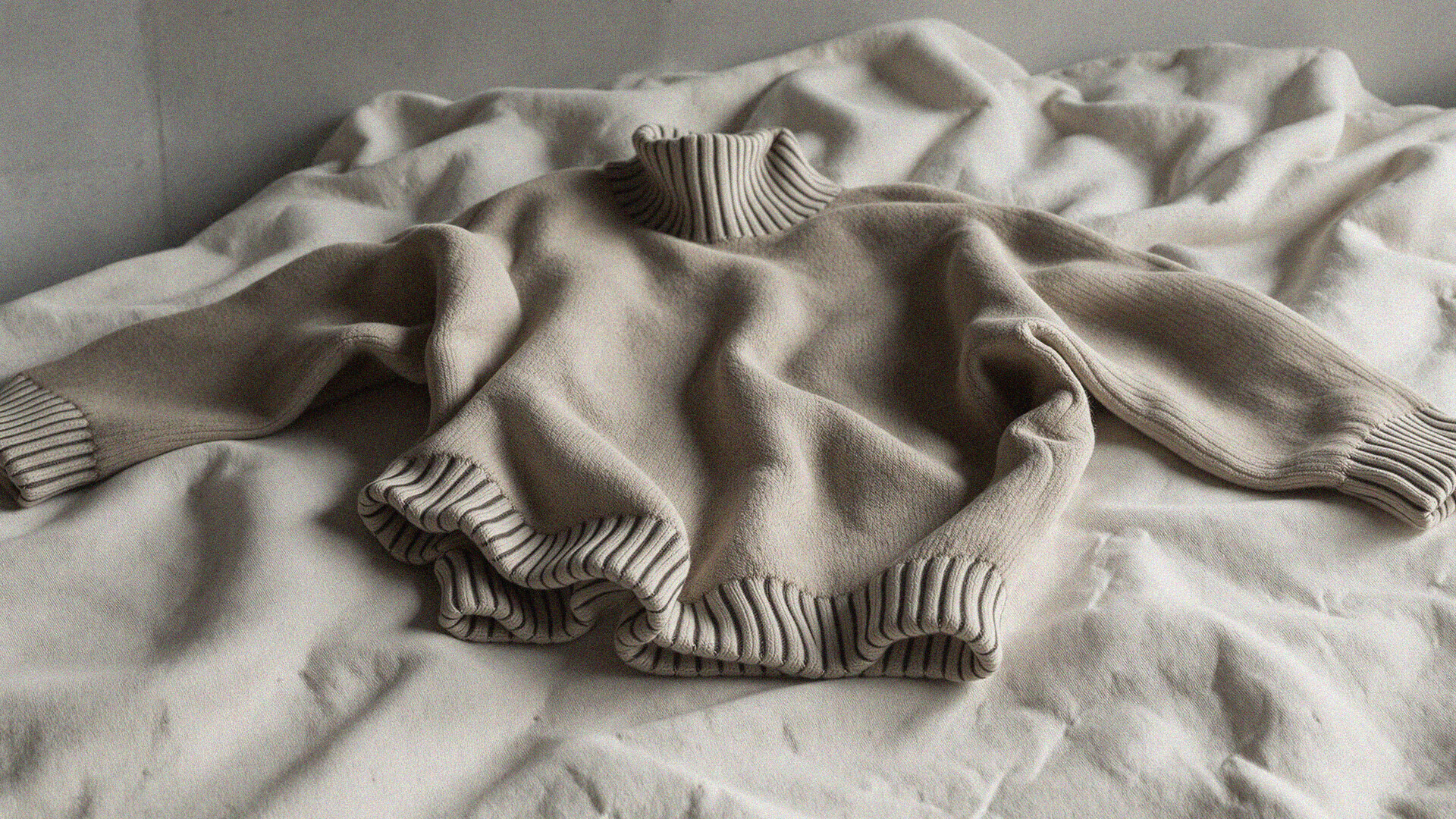
There is a grey merino sweater that pills only on the left side, in a soft band just above the hip. It took its owner most of a winter to understand why. She carries her bag on her left shoulder, and the strap rests exactly there, rubbing with every step from the tram stop to the office.
Nothing was wrong with the sweater. It was recording her walk.
A map of how you move
Pilling is usually treated as a flaw, a sign of cheap yarn or careless washing. It is more useful as a map. The small balls of fiber collect wherever fabric meets resistance, and resistance comes from the body and its habits.
Some friction zones are almost universal:
- The inner arms of a sweater, where the sleeves brush the torso
- The underarms, where two layers of knit meet with every reach
- The inner thighs of trousers and jersey leggings
- The seat of wool trousers, especially for people who sit most of the day
When people begin to notice these patterns, the garment changes character. A forearm that has gone fuzzy is a record of how you work.
What the fibers are doing
A pill forms when short fibers work loose from the yarn, migrate to the surface and tangle with their neighbors under repeated rubbing. What happens next depends on the fiber.
Wool, cashmere and other animal fibers
Natural animal fibers pill early and often, then tend to settle. Cashmere is famous for it. A new cashmere sweater sheds its loosest, shortest fibers in the first several wears, and those pills usually break away on their own or lift off easily. After that initial period, a well-spun cashmere often pills far less.
Merino behaves similarly, though its longer staple makes it calmer from the start. Lambswool and shetland pill more visibly and are often loved for the slightly worn texture they develop.
Blends and synthetics
Polyester, acrylic and nylon fibers are strong, which sounds like an advantage until you look at a pill. Because the anchoring fibers don't break, the little balls stay attached to the surface indefinitely. A wool-acrylic blend can look tired within a season, with pills that cling stubbornly and multiply.
This is why pilling can say as much about the yarn as about the wearer. The same strap on the same hip will produce a passing fuzz on merino and a permanent rash on a 70% acrylic knit.
Reading the pattern over time
A single sweater tells you something. A whole drawer of them, observed across a few seasons, tells you considerably more.
People who keep any kind of record of what they wear, whether in a notebook, a spreadsheet or a wardrobe app, start to see wear and pilling side by side. A navy crewneck worn forty times with a light fuzz under the arms is a different object from a cream knit worn four times that already looks matted at the elbows. The first is aging at a reasonable pace. The second is struggling with something, whether a weak yarn, a bad match for your daily routine, or both.
This is where wear-data becomes quietly useful. In Vitrina, a sweater's history sits next to the sweater itself: how often it has been reached for, in which months, alongside what. Looking at that history alongside the actual fabric often explains a garment better than the label does.
The arithmetic tends to sort itself out in the background. A £180 merino sweater that pills lightly and gets worn sixty times across three winters costs about £3 a wear. A £45 blend that looks shabby after eight wears costs more than £5, and it spends most of its life folded at the back of a shelf. Few people need to run these numbers. It is reassuring, though, that the garments that feel right to wear are usually the ones that hold up on paper too.
Over time, the friction map also starts to describe the person. Someone who cycles to work will find their trousers wearing at the inner seam. Someone who spends long afternoons at a drafting table will find their sleeves going first. The clothes and the life are recording the same thing.
Care at the friction points
Once the zones are visible, care becomes more precise. It stops being a general routine and starts to follow the specific places where each garment works hardest.
People who live with knitwear for years tend to settle into a few habits:
- De-pilling by hand with a wooden sweater comb or a cashmere stone, working only on the affected patches rather than the whole surface
- A fabric shaver reserved for denser or synthetic-blend knits, used lightly, since too much pressure thins the yarn
- Resting wool between wears, often a day or two, so the fibers recover their shape and loosen their grip on each other
- Washing inside out, in cool water, so the outer face meets less agitation
- Folding instead of hanging, which keeps shoulders from stretching and stops sleeves from rubbing against neighboring garments in the closet
A pilled patch, combed out gently on a Sunday afternoon, also gives you a few quiet minutes with a garment you wear without thinking. You see where the yarn has thinned and where the elbow may eventually need darning. You notice that the sweater has, over three winters, taken on the shape of your arms.
What the wear leaves behind
Clothes that are worn often carry evidence of it. A fuzz along one sleeve, a softened band at the hip and a slight polish at the seat of a pair of trousers all come from use.
When you know where your clothes pill and why, the marks stop looking like damage. They become a record of how you carry a bag, sit at a desk and walk to work, and how often you reached for that sweater over the past few winters.