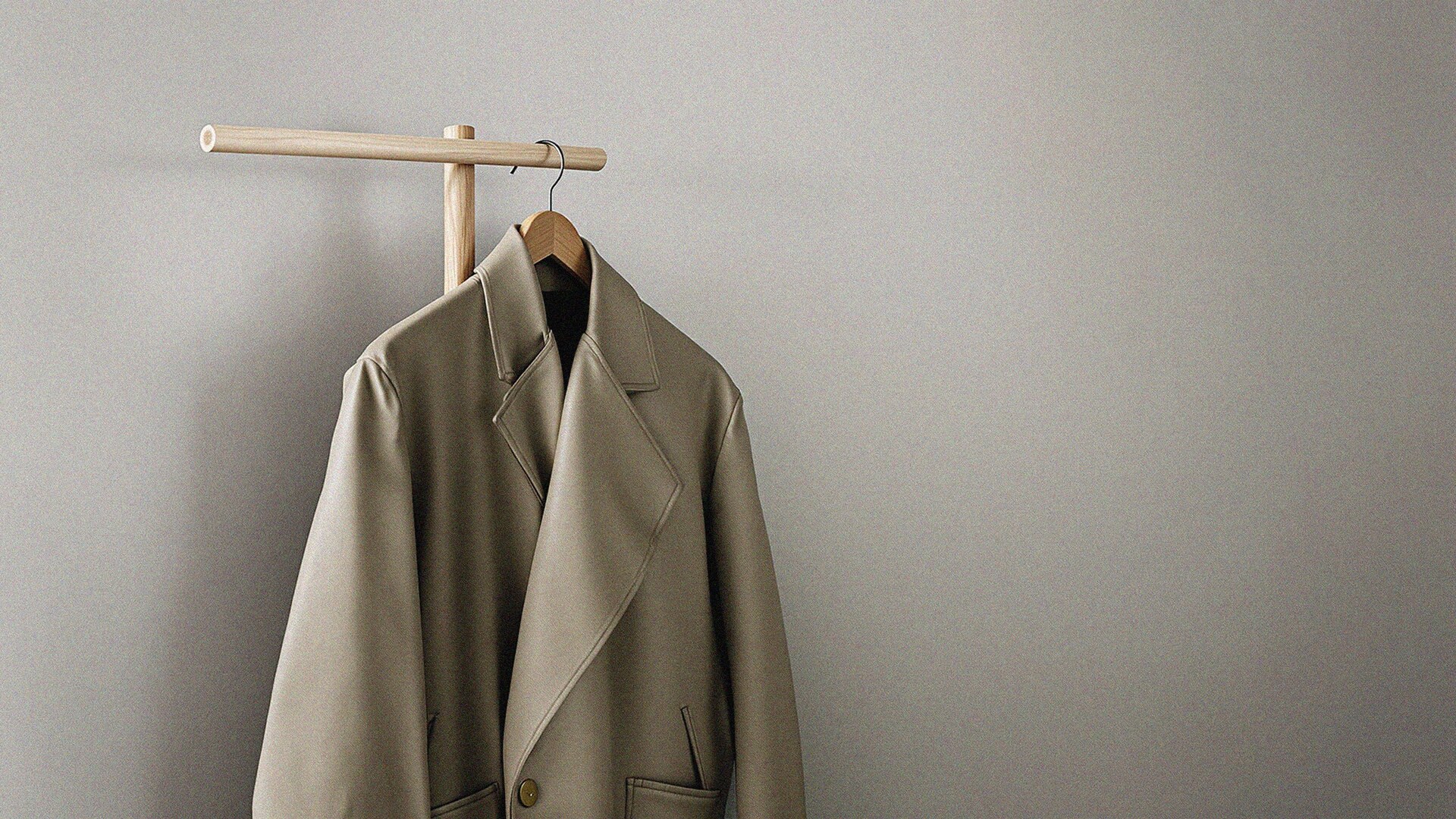
And then there's the jacket. Good label, good cut, bought after some deliberation. It hangs at the far end of the rail with the tags long gone but the feeling still attached — that small hesitation every time your gaze passes it. You keep it because it's nice. You never wear it because it isn't yours.
Most closets hold both kinds. The question is what makes the difference.
The difference isn't quality
It's tempting to think the strangers are simply the mistakes — the cheap, the trend-chasing, the impulse buys. Sometimes that's true. But plenty of expensive, well-made, genuinely beautiful things stay strangers for years. And plenty of unremarkable pieces become so much yours that you mourn them when they finally wear through.
So quality isn't the axis. Neither, really, is taste. The grey sweater might be objectively duller than the jacket.
What separates them is something closer to fit with your actual life — not your size, but your days. The clothes that become yours tend to answer a question you genuinely have. The strangers answer a question you thought you should have, or hoped to have, or saw someone else having.
The life you have versus the life you pictured
The jacket was bought for a version of you. The one who goes to gallery openings, or travels light through European cities, or has the kind of evening that calls for exactly that silhouette.
That version might be real and just rare. More often it's aspirational — a self you were shopping for rather than dressing.
Clothes bought for a pictured life stay strangers because the occasions never quite arrive, or when they do, you reach for something safer. The garment keeps waiting for its moment. You keep feeling vaguely guilty walking past it.
How something becomes yours
Becoming yours is rarely love at first sight. It's accumulation.
A piece earns its place through repetition — worn, washed, worn again, caught in a hundred small ordinary moments until it stops being a thing you own and becomes part of how you move. The wearing is what does it, not the buying.
This is why the break-in period matters more than the purchase. Linen softens. Denim molds. Wool learns the shape of your shoulders. A leather bag goes from stiff and self-conscious to something that falls open at your touch.
- the cotton shirt that finally drapes right after its tenth wash
- the boots that stopped being someone else's boots somewhere around the third month
- the scarf that holds a particular way you fold it, because you've folded it that way so often
Friction is the quiet killer
A garment that asks too much rarely becomes yours. The shirt that needs ironing before every wear. The trousers that only work with one specific pair of shoes you don't love. The dress that requires a particular bra, a particular weather, a particular mood.
Each small condition is a reason to reach for something else. And reaching for something else, again and again, is precisely how a thing stays a stranger.
The pieces that become yours tend to be low-friction in some honest way — not because they're casual, but because they slot into your life without negotiation. You can wear them tired. You can wear them without planning. They don't require you to become a slightly better-organized person first.
Why the strangers accumulate
Here's the quiet trap: the strangers don't announce themselves. No single one is a problem. Each is just a nice thing you happen not to wear yet.
But they pile up. They take the good hanger space, the eye-level shelf, the front of the drawer. And because they're visually present — because you see them every morning — they create a peculiar fatigue. A closet full of clothes you don't wear feels, somehow, like having nothing to wear.
The math, when you eventually look at it, tends to be lopsided. People often discover that something like a fifth of their wardrobe does most of the actual wearing. The rest is a slow-moving museum of intentions.
This isn't a failure of discipline. It's just what happens when buying outpaces living. Every garment enters with a story about who you'll be in it, and only some of those stories turn out to be true.
Seeing what you actually wear
The strangers survive partly because they're hard to count. They blend into the mass. You know the grey sweater is a favorite, but you couldn't easily say which third of your clothes have gone untouched since last winter.
This is the gap where attention does its quiet work. When you can actually see your wardrobe laid out — not as a pile but as a set of distinct things, with some honest sense of what gets worn — the strangers stop hiding. Vitrina exists for that kind of looking: a way to see what's already in your closet, all at once, instead of only the few pieces at the front of the rail.
What surfaces is rarely a shopping list. It's recognition. Oh. I never wear that. I always wear this. The closet stops being a vague anxiety and becomes a place you actually know.
Living with the difference
Once you can tell the difference, the relationship shifts. You stop buying for the pictured life quite so often, because you've seen how those purchases end up. You start trusting the evidence of what you already reach for.
Some strangers, given a second look, finally get worn — they were only ever waiting for permission. Others you let go of without much grief, because you can see now that they were never going to become yours, and keeping them was just keeping the guilt.
And the favorites get the care they've earned. You wash the grey sweater gently because you understand, now, what it is to you. Not an asset. A companion in the ordinary business of getting dressed.
The clothes that become yours are the ones you stop noticing — in the best way. They disappear into your days. What's left, when the strangers thin out, is a closet where almost everything is familiar, and getting dressed feels less like deciding and more like remembering.