Why Small-Batch Production Costs More (and Why That's the Point)
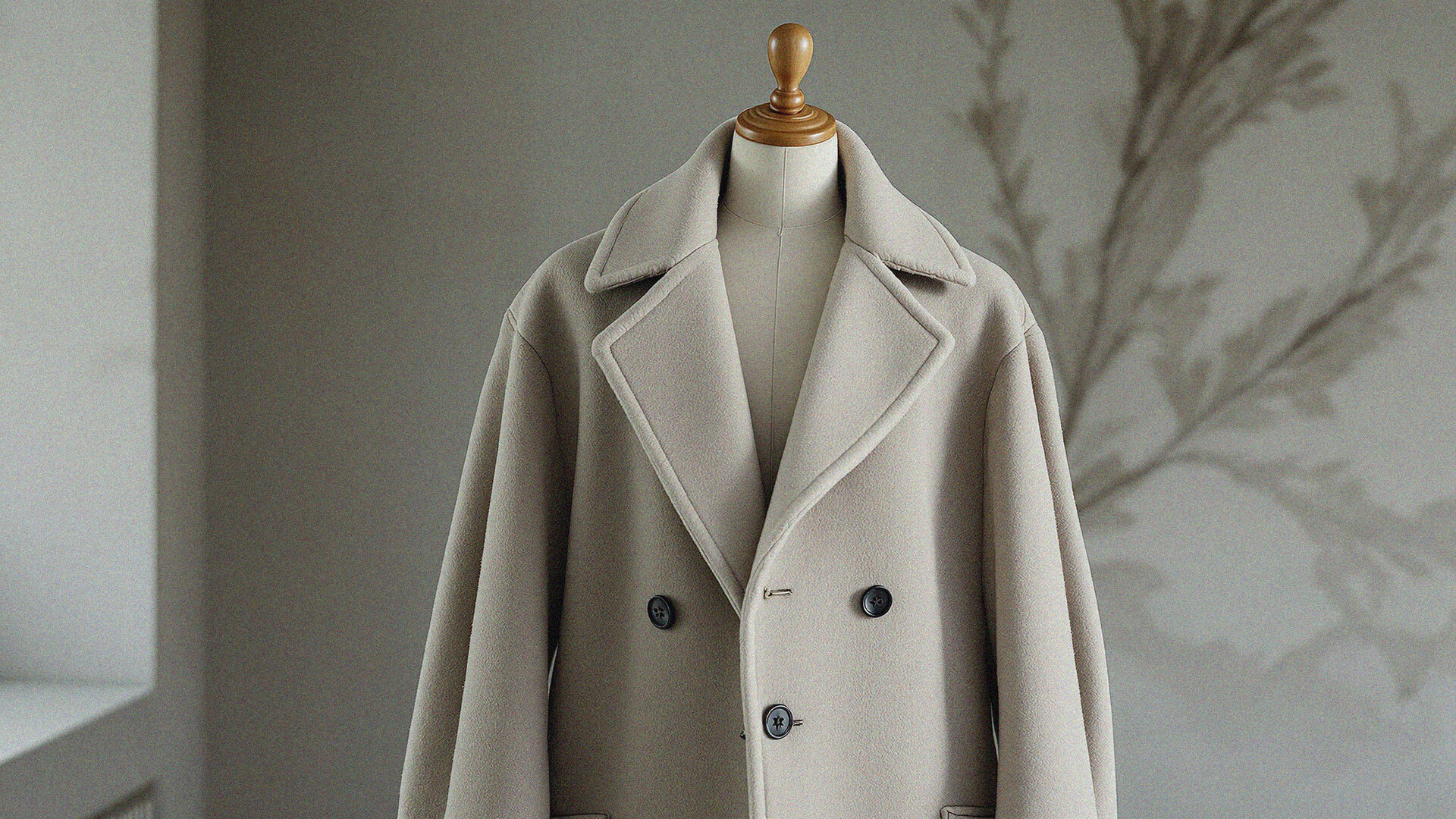
A friend of mine keeps a wool coat she bought in 2019 from a workshop outside Porto. Forty coats that season, all of them cut from the same bolt of Portuguese wool, sewn by six people who have worked in that room for years. She paid what felt at the time like an unreasonable amount.
She wears it four months a year. The lining has been replaced once. The shoulders still sit where they should, which is the part most people don't notice until it stops being true.
What she talks about, when the coat comes up, is not the price. It's the fact that she knows where it came from — and that after seven winters, it still looks like a decision she made rather than one that happened to her.
The arithmetic of forty versus forty thousand
Manufacturing rewards repetition. A factory cutting forty thousand identical shirts spreads its costs across every one of them: the pattern is drafted once, the fabric ordered by the container, the machines set up in the morning and left running until the order is done. The marginal shirt costs almost nothing.
A workshop cutting four hundred shirts does the same setup work and divides it by a hundredth as many garments. The pattern still has to be graded. The fabric still has to be sourced, and at four hundred units, no mill offers a volume discount.
Then there's the part that doesn't scale at all: the sewing itself. A shirt with a properly set sleeve and a flat-felled seam takes a skilled person a certain number of minutes, and no amount of scale reduces those minutes. Large factories manage this by breaking the garment into fragments — one person does collars, all day, for years. Small workshops can't fragment that finely. Someone sews most of the shirt, which is slower and requires a broader skill set, which costs more.
The premium isn't a markup on exclusivity. It's the honest cost of not amortizing anything.
What the extra money is actually buying
Fabric that was chosen, not sourced
At volume, fabric is a line item negotiated down to a target. At small scale, it's usually the opposite — the maker picks the cloth first and builds the price around it, because there isn't enough volume to bully a mill into anything.
This is why small-batch garments so often feel different in the hand before you've even looked at the label. A midweight Irish linen, a Japanese selvedge denim, a wool with actual crimp left in it. These aren't luxury materials in the marketing sense. They're materials someone was allowed to choose.
Construction decisions that survive contact with the spreadsheet
Every garment contains a hundred small decisions that cost a few cents each. Whether the seams are finished or overlocked. Whether the buttonholes are cut before or after sewing. Whether there's enough fabric in the seam allowance to let the waist out in five years.
At forty thousand units, a few cents is a real number and those decisions go one way. At four hundred, the same decisions are noise in the budget and tend to go the other way — not out of virtue, but because nobody's watching that line closely enough to fight over it.
The person who made it can be asked
Small runs mean short chains. The founder knows the pattern cutter. The pattern cutter knows the workshop. When something goes wrong — a seam that puckers, a size that runs strange — there are three phone calls between the problem and the person who can fix it, not thirty.
This shows up in how the garments age. Small brands hear about failures directly and quickly, and the next run reflects it.
The math, since you were going to do it anyway
A €90 shirt worn twenty times a year for two years before the collar gives out: roughly €2.25 a wear. A €280 shirt worn thirty times a year for eight years, because you actually like it: about €1.17.
This is true, and it's also the least interesting thing about the situation. The numbers only work if the second shirt is one you reach for. A beautifully made garment hanging unworn is worse arithmetic than a cheap one you live in.
Which is the part the cost-per-wear framing keeps missing. The variable that matters most isn't durability — it's whether the thing suits you well enough that you keep choosing it. That's not something a production method can guarantee.
The trap of expensive-and-unworn
Most people who have shifted toward fewer, better-made clothes have a version of the same story: the first few purchases were wrong. Not badly made — just not right. The colour that looked considered in the studio and severe in daylight. The jacket bought for a version of your life that hasn't materialized.
The garments were good. The knowledge wasn't there yet.
Knowing your wardrobe — what you actually reach for on a Tuesday, which three shirts do eighty percent of the work, the sweater you own two of because you keep forgetting you already have one — turns out to be the thing that makes the more expensive purchase safe. Vitrina exists for this: seeing what's already hanging there, in one place, before deciding what's missing.
People who have that picture tend to buy less often and get it right more often. The two are the same habit.
What small-batch is really selling
There's a temptation to frame this as ethics, and some of it is. Fewer units means less deadstock, less discounting, less of the churn that makes clothing feel disposable.
But the more honest description is specificity. A garment made in a run of four hundred can be made for someone in particular. It can have a rise that's genuinely high rather than nominally high, a sleeve cut for a real arm, a colour that someone loved rather than one that tested well.
Volume production optimizes for the average. Small runs don't have to, and mostly don't want to.
That specificity is what you're paying for, and it's also why the premium is unevenly worth it. If the specific choices a maker made happen to align with you, the garment is a bargain at nearly any price. If they don't, no amount of craft redeems it.
The Porto coat still fits my friend because it was cut for a body roughly like hers by people who were thinking about how it would sit rather than how many they could produce that week. She didn't buy quality in the abstract. She bought a set of decisions that happened to match her own. Seven winters on, the coat comes off the hook in October and goes back on it in March, and in between she doesn't think about coats at all.