The Bag by the Door
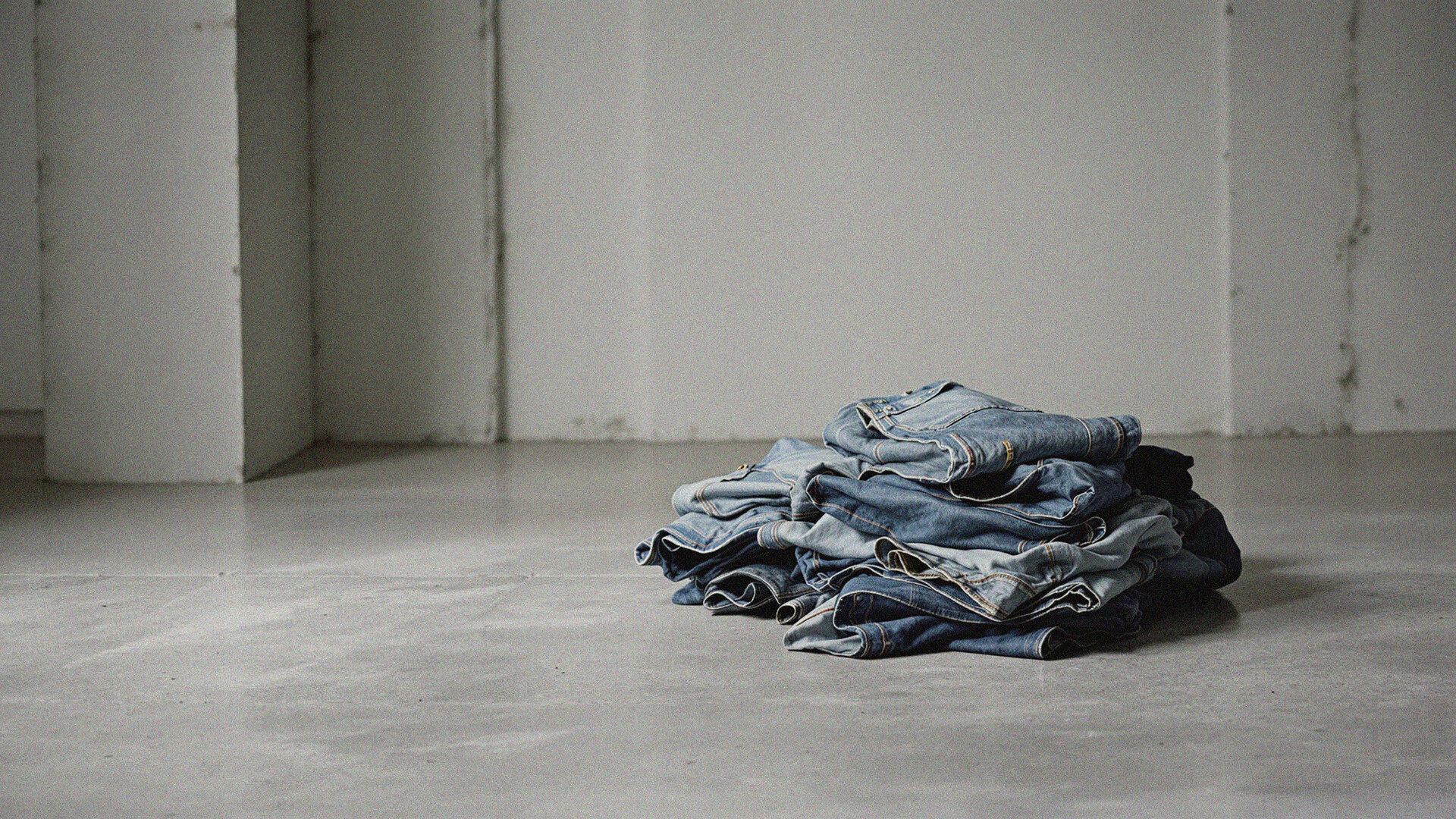
It sits there for a week, sometimes two. A black bin liner or a canvas tote, slumped against the coat rack, full of things that were once chosen carefully. The wool coat with the torn lining. Three pairs of jeans that fit a different body. A dress worn twice, both times to weddings.
Then one Saturday it goes into the car, into a metal bin behind a supermarket or across a counter at a charity shop, and the weight lifts. Something has been resolved.
But nothing has ended. The bag has simply entered a system most people have never had a reason to look at.
The First Sort
At a charity shop, the bag lands in a back room with dozens of others. A volunteer or a paid sorter opens it and makes a fast decision — usually within seconds per garment.
The criteria are less about quality than about sellability in that specific shop, that specific week. A neighbourhood in early autumn does not need swimwear. A shop that already has forty black cardigans on the rail does not need a forty-first, however good.
Depending on the country and the organisation, somewhere between 10 and 30 percent of what arrives makes it onto the shop floor. The figure moves with location and season, but the shape of it holds: the shop keeps a minority.
The rest is not thrown away. It is sold — by weight, to a textile merchant, for something in the range of a few hundred euros per tonne. This is how charity shops fund themselves, and it is entirely ordinary. It is also the moment your coat stops being a coat and becomes a commodity.
What Merchants Look For
At the merchant's warehouse, bales are opened and graded again, this time by people who handle thousands of garments a day and can tell fibre content by feel.
The sort is roughly threefold:
- Reusable, premium — natural fibres in good condition, recognisable labels, vintage. This is the small fraction with real resale value, and it moves toward vintage wholesalers, online resellers, and the Japanese and Korean secondhand markets.
- Reusable, standard — wearable, unremarkable, mostly synthetic-blend high street clothing. Baled and exported, largely to East and West Africa, South Asia, and Eastern Europe.
- Non-reusable — stained, holed, pilled, or simply too degraded to sell anywhere. This becomes wiping cloths for industry, or is shredded into insulation and carpet underlay, or is burned for energy, or is landfilled.
Kantamanto, and What Arrives There
Accra's Kantamanto market handles something like fifteen million garments a week. Traders buy sealed bales sight unseen — a gamble of a few hundred dollars against contents they cannot inspect.
A good bale contains cotton shirts and denim that can be repaired, altered, dyed, and resold at a profit. A bad bale contains synthetic dresses that fall apart on the rail. The local phrase for secondhand clothing, obroni wawu, translates roughly as "dead white man's clothes" — the assumption, at the outset, was that no living person would give away so much.
The traders in Kantamanto are not passive recipients. They are one of the most skilled repair and resale economies on earth, and they add real value to what arrives. What defeats them is volume and quality: an estimated 40 percent of each bale is unsellable on arrival, and the cost of disposing of it falls on them, not on the country that shipped it.
That waste ends up in landfill at Kpone, in open drains, and on the beach at Jamestown, where tidal action compacts discarded clothing into dense textile reefs.
None of this makes donating wrong. It makes donating a transfer, not a solution — and the difference matters at the moment you fill the bag.
What Actually Determines the Outcome
The path a garment takes is decided almost entirely before it leaves your house, by two things.
Fibre. Cotton, wool, linen, silk, and leather have downstream markets. They can be resold, repaired, reused as wiping cloth, or mechanically recycled into new yarn. Polyester and acrylic blends have almost none — fibre-to-fibre recycling of blended synthetics remains largely uncommercial, despite two decades of announcements. A wool jumper has options. A poly-viscose top has one.
Condition. A missing button is nothing; a sorter reattaches it or a Kantamanto tailor does. A grey-white collar, underarm staining, or pilling across the seat of a pair of trousers moves a garment from grade one to grade three in the time it takes to unfold it.
Which means the most consequential thing that happens to donated clothing happened years earlier, in a washing machine set too hot, or on a hanger too narrow for the shoulders.
Most of what fills those bags was not worn out, either. It was forgotten — pushed to the back of a rail, out of sight for two seasons, then rediscovered as something that no longer feels like theirs. A wardrobe seen whole, the way Vitrina lays it out, keeps the forgotten coat in view; it stays a coat you know rather than a stranger you find in October.
Living With This Knowledge
Once you know how the sorting works, the bag by the door reads differently. It becomes obvious that "donating" describes at least three different acts, with three different outcomes.
Giving a well-kept wool coat to a charity shop in October is a genuine gift; it will be on the rail within days. Giving a bag of unsorted synthetic tops to the same shop is asking a volunteer to do your sorting and a merchant to absorb your disposal cost. Both feel identical from the driver's seat.
People who have thought about this for a while tend to change their behaviour in unglamorous ways. They wash cotton at thirty and hang it to dry, so the fibres last long enough to have a second life. They repair before the damage becomes structural. They give directly — to a friend, a cousin, a local swap — where they can see the garment land. They donate to the shop that will actually sell it, and they check what that shop is short of.
And they stop letting things accumulate in the dark. A rail that is looked at is a rail that is edited slowly, garment by garment, in daylight — rather than all at once, in a hurry, into a liner by the door.
The Longer Frame
There is a quiet arithmetic underneath all this, and it belongs here rather than at the beginning.
A garment kept and worn for nine years instead of three does not need to be replaced twice. It never enters a bale, never crosses an ocean, never becomes someone else's disposal problem. It also costs less per wearing than anything you could buy to replace it, though that is the least interesting thing about it.
The interesting thing is what it means to have a coat you know — the weight of it, the way the pockets have softened, which shirt it wants underneath. That relationship is not available to something you bought in March and gave away in November.
The bag by the door is not evidence of failure. It's a record of decisions made quickly, over years, about things that deserved more attention than they got. What changes isn't the bag. It's how much of your wardrobe you can still picture with your eyes closed.