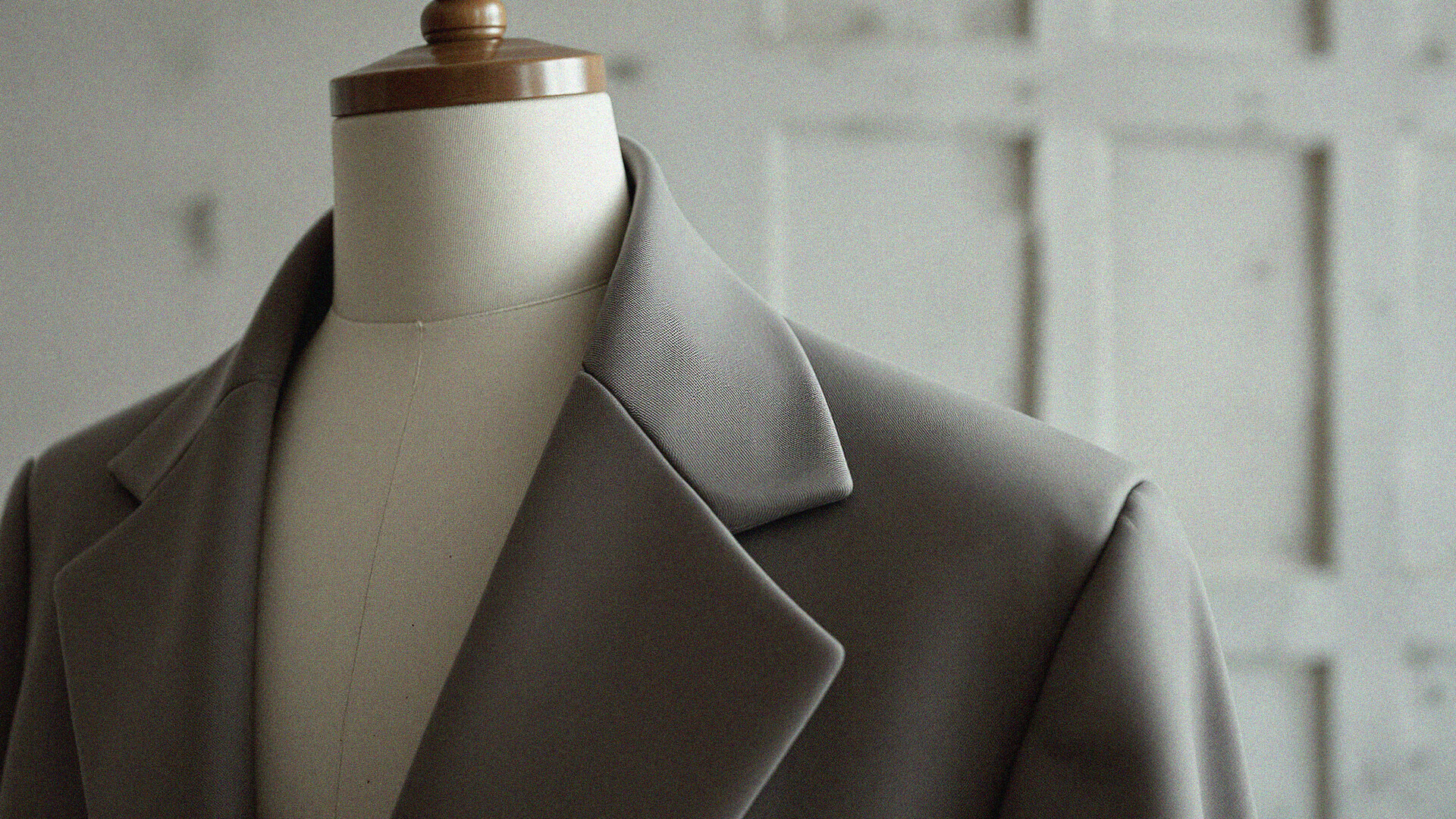
The Fitting Room That Fits Everyone
There's a moment in every online purchase where you stop trusting your own judgment. The photo shows a coat on someone standing very still. The measurements are listed in centimeters. You know your size, more or less, and you know that knowing your size means almost nothing.
So you tap the button that says see it on you. A version of your body appears, wearing the coat. It looks fine. It looks, in fact, like every other coat you've tried this way.
That last part is worth sitting with.
What the Software Is Actually Doing
Virtual try-on has gotten genuinely good at a narrow set of problems. Most tools now combine a body scan — often just two phone photos — with a garment mesh built from the manufacturer's pattern data. The software drapes one onto the other and renders the result.
Within that scope, the accuracy is real:
- Length and proportion. Where a hem lands on your leg, whether sleeves swallow your hands, how much of your torso a cropped jacket leaves exposed. This is geometry, and geometry is solvable.
- Fit at the seams. Whether a shoulder seam sits on your shoulder or halfway down your arm. Whether the waist button will close.
- Color against your skin. Less reliable than the first two, but improving. Good lighting on your reference photo does more here than any algorithm.
- Silhouette comparison. Two blazers, same size, side by side on the same body. The differences that catalog photography flattens become visible.
The Things That Stay Outside the Frame
A garment is not a shape. It's a shape plus a behavior, and behavior is where the rendering thins out.
Weight. A wool-cashmere coat and a polyester one can render identically and feel like different objects entirely. One settles on your shoulders. The other sits there, faintly, like a rumor. No screen has communicated the difference yet, and the difference is most of why you'd choose one.
How fabric moves when you do. Try-on models render a standing pose, sometimes a short animated turn. They don't render sitting down in a pencil skirt, reaching overhead in a fitted shirt, or the way a wide trouser leg swings when you walk fast. A garment you only ever see standing still will surprise you the first time you're late for something.
Temperature. Linen and rayon can look nearly identical in a render. One of them will save your summer. The other will glue itself to you by eleven in the morning.
Sound. Some jackets are loud. Nylon rustles, certain taffeta linings whisper against themselves all day. You find this out on the third wear, in a quiet room, mid-meeting.
How it ages. The render shows you the garment on day one. It cannot show you the pilling under the arms after six washes, or the way good denim goes soft and personal, or the fact that a cheap knit will lose its neckline shape before autumn ends.
The Deeper Blind Spot
All of this is a technical limitation, and technical limitations tend to get solved eventually. Haptics will improve. Physics simulation is already better than it was two years ago.
But there's a category of question the technology isn't structured to answer, and it isn't about the garment at all.
Virtual try-on renders a coat on your body against a neutral background. It cannot render that coat next to the three similar coats already hanging in your hallway. It doesn't know that you own a navy blazer you never wear because the sleeves are a half-inch too long, and that the one on screen has the same measurement. It doesn't know that you reach for the same grey sweater four days a week and have quietly stopped wearing everything you bought last spring.
The software answers does this fit me. The harder question is does this fit what I already have — and that question requires a different kind of information entirely. Tools like Vitrina exist in that second space: not predicting how something will look on you, but showing you what's already in the closet, how often it actually gets worn, what it goes with. A record of your own habits, which turns out to be the thing you're least able to see from inside them.
Both kinds of seeing matter. They're just not the same seeing, and one of them is much easier to build.
Using It Well
People who get real value from virtual fitting rooms tend to use them in a particular way — narrowly, and late in the process.
They use it to eliminate rather than to select. The coat that renders three sizes too boxy is out; that's decided, no shipping label required. What survives the render still has to be tried on properly.
They use it hardest on repeat purchases — a brand whose trousers they already own, a second color of a shirt that works. Here the software is nearly perfect, because the unknown variable has been removed. The fabric is a known quantity. Only the color is new.
They ignore it entirely for anything with structure and stiffness — tailoring, outerwear with real canvassing, anything cut close through the ribcage. These garments derive their whole character from how they hold themselves against a body, and holding-against is precisely what a mesh simulation approximates worst.
And the returns data, for what it's worth, is quietly encouraging: retailers offering good try-on tools see meaningfully fewer size-related returns. The technology works on the problem it was built for. It's just a smaller problem than the marketing suggests.
What Remains Physical
There's a reason the good tailors still put a hand on your shoulder before they say anything about a jacket. They're not measuring. They're checking how the garment sits when your weight shifts, whether the collar stays put when you turn your head, what happens across the back when you cross your arms.
The screen shows you a still frame of a possibility. Wearing something is a relationship that unfolds over months — the shirt that softens into your favorite, the trousers that turn out to be slightly wrong in a way you can't name and never wear. Prediction handles the first five seconds of that.
The rest arrives slowly, in ordinary weather, on days you weren't paying attention. Which is why the clothes you know best are almost never the ones you chose most carefully — they're the ones that stayed long enough to tell you something.