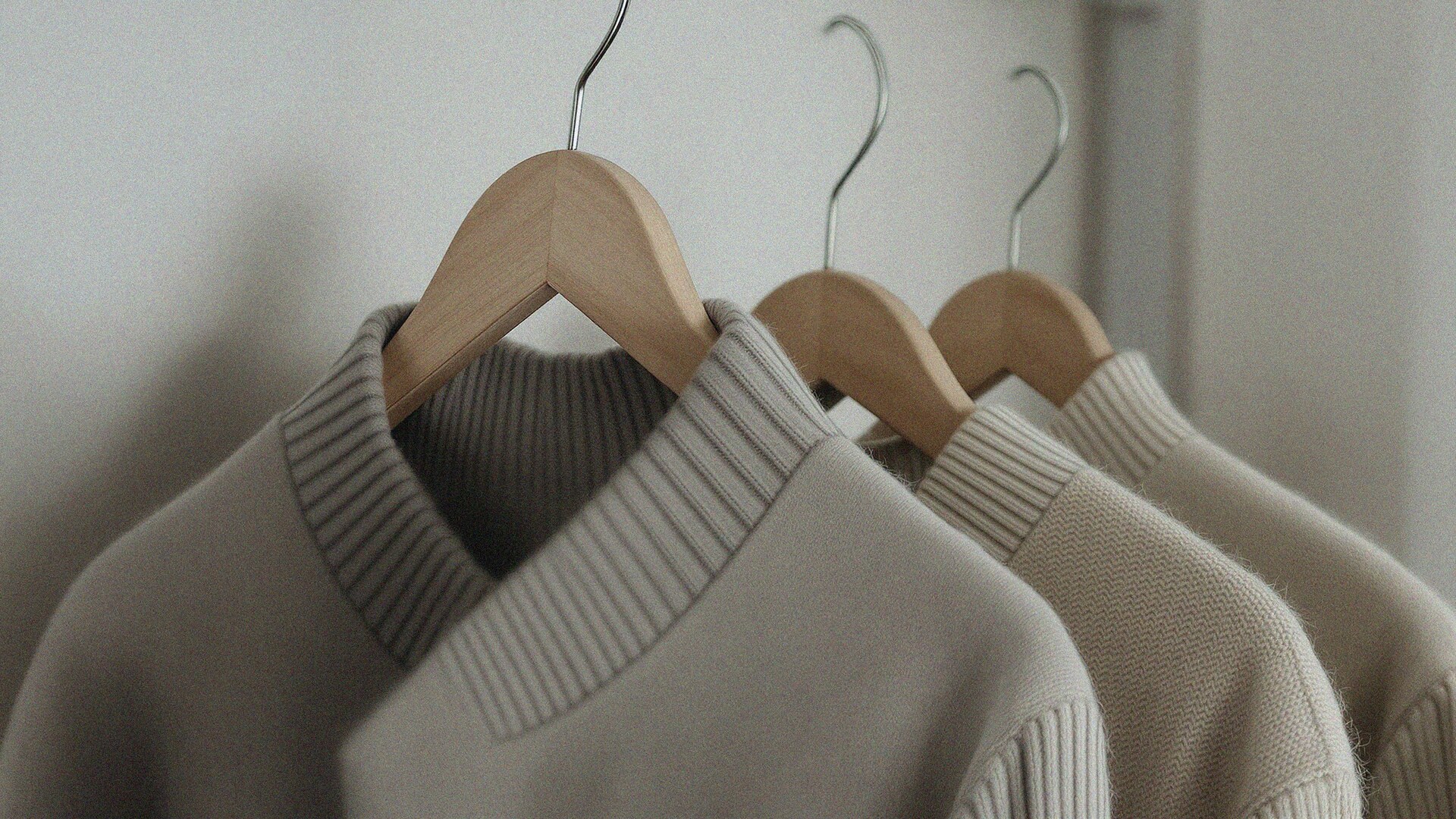
A friend owns a charcoal cashmere sweater she's had for nine years. No label on the outside, nothing to read from across a room. She wears it the way other people wear something brand new — except she knows exactly how it moves, where it pills, which shoulder catches the light. When someone asks where it's from, she has to think for a moment. She doesn't remember the shop. She remembers the winter.
That sweater is where quiet luxury actually lives now, and it has very little to do with the term as the internet used it.
When the Phrase Outlived Its Own Joke
For a stretch there, quiet luxury meant a specific costume: the unbranded grey, the plain expensive t-shirt, the loafers you were supposed to recognize precisely because most people couldn't. It was stealth wealth — a logo turned inside out. The signal was still a signal. You just needed the right eyes to read it.
The trouble with a dress code built on recognition is that recognition is exhausting and, eventually, public. Once a magazine explains which unmarked coat the rich are wearing, the unmarked coat becomes a marked one. The whole thing collapses into the loop it was trying to escape.
What's left, after the trend cycle finishes chewing on the phrase, is something quieter than quiet luxury ever was as a look. Not a brand strategy. A relationship to the things already hanging in the closet.
The tell was never the fabric
The fabric is for sale to anyone. Cashmere, raw denim, a heavy cotton oxford, leather with a real grain — these come to anyone with the budget, and the budget keeps dropping as more labels chase the aesthetic.
What no single transaction buys is knowing the garment. The way a linen shirt softens only after the fortieth wash. How a particular jacket sits wrong for the first month and then, suddenly, doesn't. The fade on a pair of boots that came from your walking, not a factory's distressing machine.
That knowledge is the thing money was always trying to imitate. The logo was a shortcut to looking like you'd lived with nice things for years. Living with them for years is the actual luxury, and it was never for sale.
What Replaced the Logo
The shift wasn't toward minimalism, exactly. Plenty of people who care about this own a lot of clothes. The shift was toward legibility — being able to read your own closet.
The wardrobe of someone who has stopped performing tends to hold a few familiar things:
- The repeats are deliberate. The same three shirts in rotation because they work, not because choice felt overwhelming.
- Nothing has tags still on it from two seasons ago.
- The expensive thing and the cheap thing hang next to each other without apology, because both get worn.
- There's evidence of repair. A rewoven elbow, a replaced button that doesn't quite match, a hem taken up by hand.
Care stopped being maintenance
For a long time, looking after clothes got framed as a kind of accounting — protect the investment, maximize the cost-per-wear, make the expensive thing last so the math works out. The numbers are real enough. A coat worn two hundred times costs less per outing than four coats worn fifty.
But people who actually live this way rarely talk in those terms. They wash the wool sweater by hand because they know the sweater, the way you know how someone takes their coffee. The cedar in the closet, the shoe trees, the brush kept by the door — these read less like a maintenance schedule and more like attention paid to something that's earned it.
The cost-per-wear math is reassuring once you're already there. It's a thin reason to start.
The Part No One Photographs
The trend coverage kept missing the satisfying part. It isn't owning the right grey coat. It's the morning the closet opens and there's no negotiation — what's there is known, what it does is known, and the decision makes itself.
Most closets don't offer that. They fill up with things bought for a version of you that didn't show up, kept out of guilt, half-forgotten behind the things that actually get worn. The clothes are fine. The relationship to them is foggy.
Seeing what you own turns out to be harder than it sounds, because the wardrobe you remember and the wardrobe you have drifted apart years ago. This is the small, unglamorous use a tool like Vitrina quietly serves — not to optimize anything, just to lay the closet out where you can look at it, and notice the four jackets you forgot you loved sitting behind the one you've worn through.
Quiet, in the end, means quiet
The version of quiet luxury that sold magazines was loud in its own way. It still wanted to be seen — just by the right people, in the right code. It was a performance pitched to a smaller, snobbier crowd.
What's underneath it, now that the phrase has worn thin, is genuinely quiet. No code to crack. No one to impress, including yourself. A closet you've stopped fighting with, full of things you recognize on sight and reach for without thinking.
The logo told other people what you could afford. Knowing your wardrobe tells you something quieter — that the looking can stop, because the thing is already hanging there, soft from washing, shaped by the years, waiting for the weather to turn.