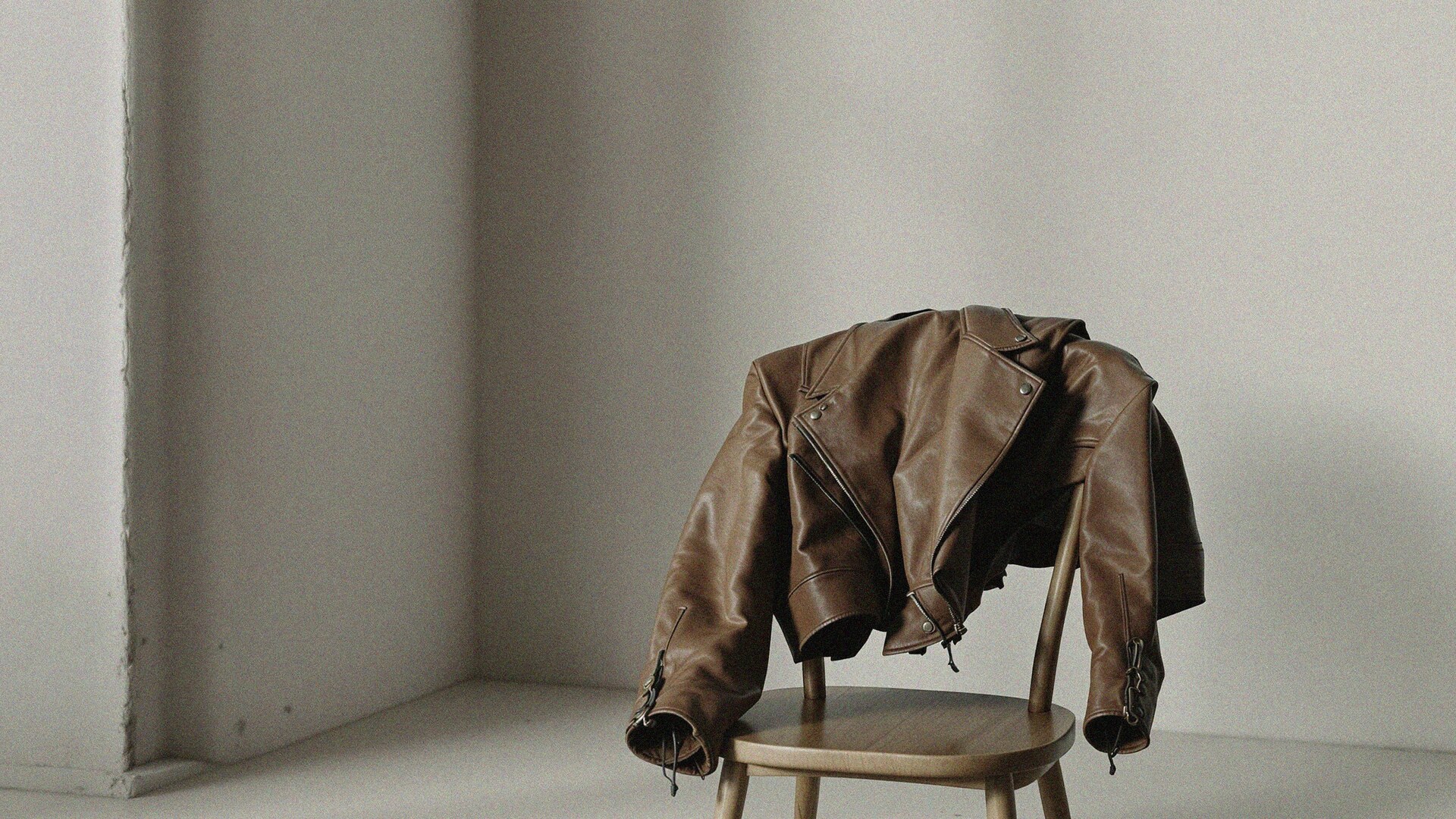
Most of what hangs in a closet doesn't earn that kind of attention. It's just there. Present without being noticed, which is a strange way for an object to exist when you've paid for it and carried it home and given it a hanger.
So here's a question worth sitting with before you do anything else: if half your wardrobe vanished overnight, which pieces would you actually grieve?
The test is the loss, not the love
People are bad at knowing what they love while they still have it. Ask someone to name their favorite shirt and they'll often pick the one they want to be their favorite — the expensive one, the one with the story, the one that photographs well.
But loss is a more honest instrument. The grief test cuts past aspiration. You don't mourn the jacket you bought for a version of yourself that never showed up. You mourn the thing you reach for without deciding to.
When people run this test on themselves, the results tend to surprise them. The pieces they'd miss are rarely the ones they spent the most on. They're the ones that disappeared into their life — worn so often they stopped registering as choices.
What survival reveals
There's a useful distinction between things you own and things you actually live with.
Owning is passive. Living-with is a relationship measured in repetition — the same boots through three winters, the linen shirt that's been washed enough times to finally feel like skin. These objects accumulate a kind of evidence. They carry where you've been.
The quiet ones do the work
If you watch how a wardrobe actually gets used, a pattern emerges. A small core does almost everything. The rest waits.
- The everyday pieces — worn weekly, sometimes more, rarely photographed, never agonized over.
- The conditional pieces — the right coat for one kind of cold, the shirt for one kind of evening — used rarely but irreplaceable when their moment comes.
- The sediment — things that haven't moved in a year, kept out of guilt or the vague sense that someday might arrive.
What's interesting is how rarely the everyday pieces announce themselves. They're not loud. A garment you'd genuinely miss tends to be one you've stopped seeing precisely because it works so well it never makes you stop and think.
Why we lose track of what matters
A closet is a bad memory device. Things fall to the back. A color you love gets bought in four near-identical versions because you forgot you already had three. The good wool coat hides behind a denim jacket you wear twice a year, and so it feels, somehow, less available than it is.
The volume itself is the problem. Past a certain number of items, attention can't hold the whole set, so it defaults to whatever's in front. You end up wearing the accessible, not the loved.
This is the quiet cost of a full closet — not money, not space, but the slow erosion of knowing what you have. You can own something beautiful and still functionally lose it to the crowd around it.
Seeing the whole set at once
There's a difference between remembering your wardrobe and seeing it. Memory edits — it keeps the recent, the guilt, the favorites, and drops the rest. Seeing the whole thing laid flat tends to break the spell.
This is the small thing Vitrina does: it lets you look at everything you own in one view, so the pieces you'd miss and the pieces you've forgotten stop hiding from each other. Not to sort or score them. Just to see them clearly enough that the grief test becomes possible — because you can't miss what you can't even picture.
When people see their full set this way, a recognition usually follows. Two or three pieces they'd defend with their life. A dozen they'd hand to a friend without a second thought. And a handful they'd forgotten they owned, now suddenly back in rotation.
The care that follows attention
Something shifts once you know which pieces you'd grieve. They stop being interchangeable.
You start treating the gray sweater differently — not because a guide told you to invest in durability, but because you've admitted to yourself that you'd miss it. The wool gets folded instead of hung so it keeps its shape. The shirt gets washed cold, dried flat, because you've watched what heat does to the linen you love and you'd rather keep it a few more years.
This isn't maintenance as a chore. It's closer to the way you take care of anything you've decided matters — a plant, a knife, a friendship. Attention first, care second. The care is just what attention looks like over time.
People who've lived this way for a while describe it less as discipline and more as relief. The agonizing happens up front, once, when you sort the loved from the tolerated. After that, getting dressed gets quieter. You reach into a smaller, clearer set, and most of what your hand finds is something you'd miss.
The version of you that's already there
The grief test doesn't ask you to buy anything or throw anything out. It just asks you to notice — to run a quiet inventory of what you'd actually mourn, and let that knowledge sit.
What usually happens next isn't dramatic. You don't purge your closet in a weekend or swear off shopping. You just start seeing the difference between the things that are yours and the things that merely live with you. The loved ones get a little more care. The forgotten ones come back or quietly leave.
And the next time you stand in front of an open closet, the question isn't what should I wear — it's nearer to which of these would I miss. Which is a softer thing to ask, and a truer one. Because you already know the answer. You've just never been asked to say it out loud.