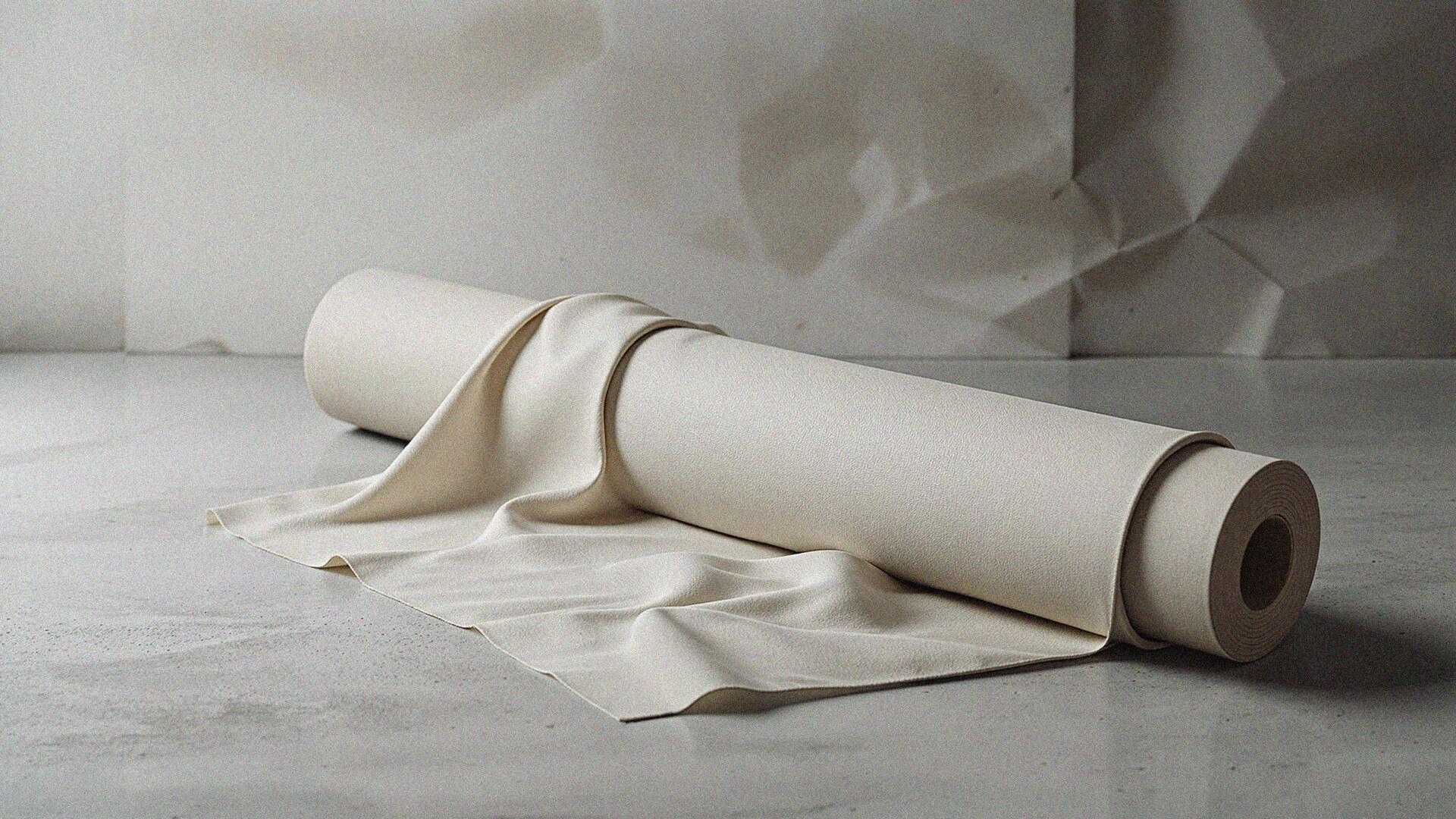
The Roll That Was Never Meant for You
In a small studio in Lisbon, a designer keeps a shelf of fabric she describes as "orphaned." Twelve metres of a heavy Japanese cotton twill in a green that was, at some point, someone's idea of the season. A mill wove it for a brand that later cut its order. It sat in a warehouse for four years before she bought it by weight.
She'll get about nine shirts out of it. Then that green is gone — not discontinued, just finished.
This is deadstock, and it has become one of the most repeated words in fashion's sustainability vocabulary. It appears on hangtags, in launch emails, in the About pages of brands that want you to know they thought about it. The claim is simple and appealing: this fabric already existed, so making something from it costs the world nothing new.
Some of that holds. Some of it is doing a lot of work it wasn't built to do.
What the Word Actually Covers
Deadstock describes fabric that exists but has no buyer. That's the whole definition, and it's why the term is so slippery — it says nothing about why the fabric is stranded.
The green twill in Lisbon is one version. A cancelled order, a mill left holding inventory, a small brand buying it at a discount years later. Genuinely surplus, genuinely rescued.
Other versions look different:
- Overruns — the extra twenty percent a mill weaves as insurance against flaws, then sells off. Routine, planned, priced in.
- Flawed lots — bolts with a slub, a colour drift, a printing error across three metres. Perfectly wearable, rejected by a buyer with tight specs.
- Warehouse clearance — fabric no one wanted at the original price, held for years, sold when the storage cost outgrew the hope.
- Fabric woven to be sold as deadstock — rarer, harder to prove, and the reason the sceptics exist. Mills in some regions have learned the word carries a premium.
The Traceability Problem
A brand buying deadstock usually can't tell you the fibre's origin, the dye process, or the mill's water treatment. That information travelled with the original order and didn't come along with the resale.
So a jacket labelled deadstock might be made from a fabric with a worse environmental record than a new organic cotton — it simply isn't being counted, because the counting happened on someone else's ledger. The garment inherits a clean claim without an audit behind it.
This isn't fraud. It's an accounting boundary, and the marketing sits comfortably on the useful side of it.
What It Genuinely Does Well
Set the claims aside and something real remains.
Fabric that has already been spun, woven, and dyed represents energy that's been spent whether anyone wears it or not. Using it means that expenditure produced a garment instead of a landfill entry. Textile waste at the pre-consumer stage is not a small number, and every metre cut from a stranded bolt is a metre not incinerated.
There's a second effect, less discussed and possibly more important: deadstock imposes scarcity on brands that would otherwise have none.
Nine shirts. Then that green is finished. A designer working from limited bolts cannot scale a bestseller, cannot reorder, cannot chase a trend into its third season. The constraint is structural. It produces exactly the kind of small, finite, unrepeatable production that sustainability rhetoric asks for and volume economics almost never delivers.
That's not a marketing story. That's a supply chain that physically can't do the thing we're worried about.
The Question the Hangtag Can't Answer
Here's where it gets uncomfortable for anyone hoping the label settles it.
A deadstock jacket made carelessly — poor construction, a fit that dates within a year, a fabric that pills after six wearings — is not an environmental win. It's a garment that will be worn eleven times and passed on. The fabric's origin story doesn't rescue the outcome.
Meanwhile a new-cloth coat, well cut, worn for a decade, quietly outperforms it on every measure that matters. The arithmetic isn't complicated. Divide the total cost of making something — in money, in water, in carbon — by the number of times it gets worn, and the denominator does most of the work. A coat worn four hundred times over twelve years absorbs its own manufacture. One worn nine times doesn't, whatever the fabric was before it became a coat.
Which means the deadstock claim is a statement about sourcing, not about outcome. It tells you where the cloth came from. It tells you nothing about whether the garment will still feel like yours a decade from now.
That second part is the only variable anyone actually holds.
Reading a Deadstock Garment Honestly
People who've bought a few of these tend to develop the same instincts, and none of them involve the label.
They look at the cloth first — weight in the hand, how it recovers from a crease, whether the weave feels dense or thin. Deadstock from a good mill often exceeds what a small brand could afford to commission new, and that registers immediately.
They check whether the flaw is disclosed. Brands doing this seriously will mention a slub at the shoulder or a colour shift on one panel. Brands doing it as decoration rarely mention flaws at all, which usually means the fabric wasn't flawed — which raises the question of why it was stranded.
They notice construction. A brand paying a premium for rescued cloth and then cutting corners on the seams has said something about what the sourcing was for.
And they come back to the plainest question available: is this a colour and a shape they already reach for? A jacket in an unrepeatable green means something only to someone who wears green. Otherwise the scarcity is just a story about a garment hanging still.
That last check is harder than it sounds, because most people don't have a clear picture of what they actually wear. A wardrobe catalogued in something like Vitrina makes the pattern visible — not as a shopping filter, but as a plain record of what gets pulled off the rail in February and what hasn't moved since spring.
Where This Leaves the Term
Deadstock is neither a badge nor a lie. It's a sourcing practice with a good average case, a genuinely useful constraint on scale, and a verification gap wide enough for anyone to walk through.
The brands using it well tend to be small, tend to name the mill, and tend to sell out and not restock. The brands using it as decoration tend to have a deadstock capsule alongside a conventional main line, which is its own kind of answer.
Neither of those facts lives on the hangtag. Both are visible to anyone who looks a minute longer.
The green twill will make nine shirts, and someone will wear one of them for fifteen years without ever knowing the word deadstock — knowing instead that it's the shirt that hangs right, the one that survived a wedding and two funerals and a decade of Tuesdays. That's the version of the story where the fabric's rescue actually finished. Everything upstream was preparation.