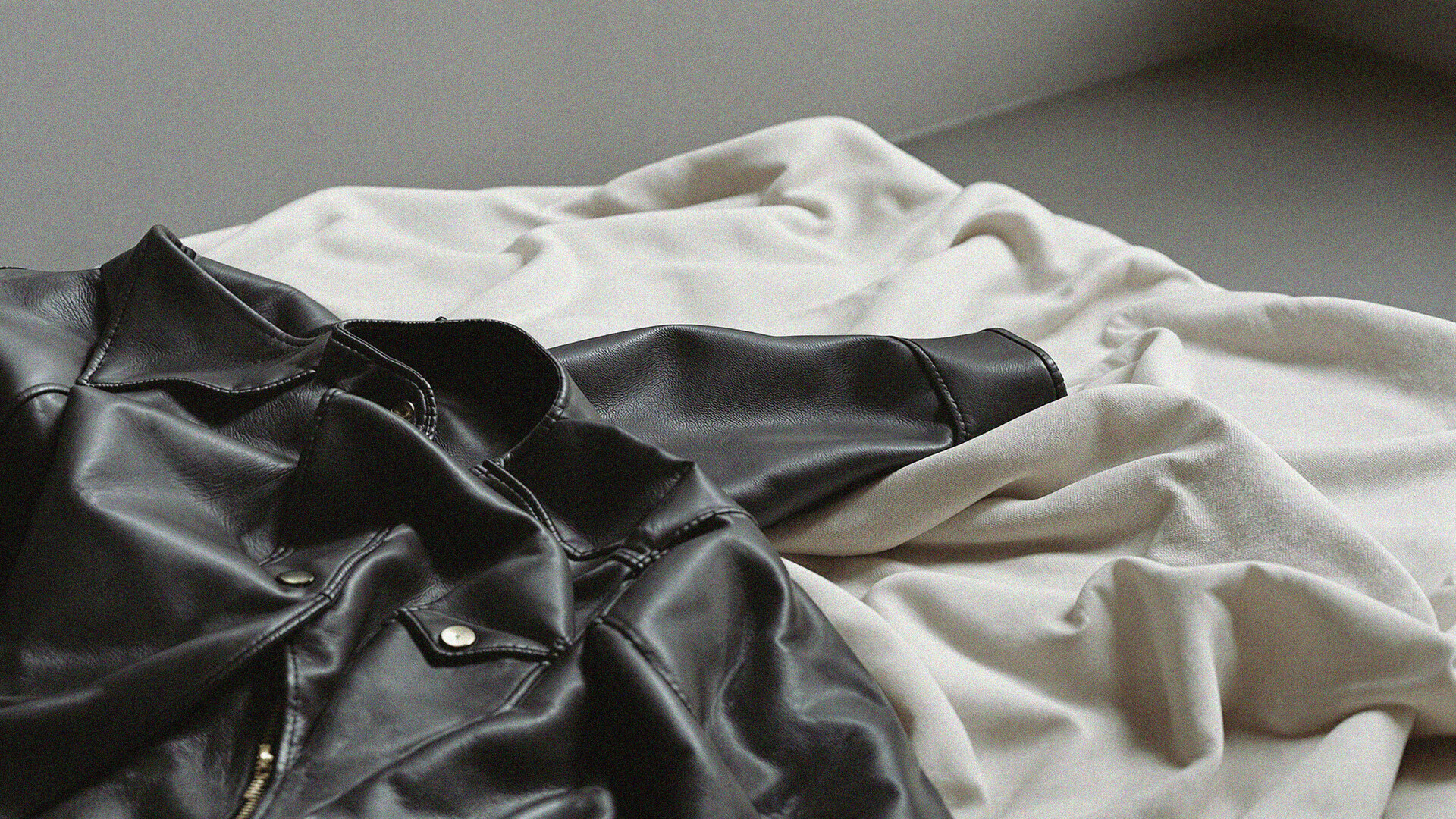
The difference starts in the tannery, before the jacket was cut, and it explains most of what people notice later.
What tanning does
Raw hide is skin: it rots, stiffens, and spoils. Tanning is the process that stops this. It binds a chemical agent to the collagen fibers in the hide so that it becomes stable, flexible, and resistant to decay.
Nearly all leather in a modern wardrobe was tanned one of two ways. The agent is the whole difference between them.
Chrome tanning
Chrome tanning uses chromium salts. It was developed in the nineteenth century and now accounts for the large majority of leather produced worldwide, mostly because it is fast. A hide can be finished in a day or two.
The result is leather that is soft from the start, even in color, and resistant to water and heat. It takes dye easily, which is why chrome-tanned leather comes in every shade, from pale pink loafers to a glossy red handbag. It rarely needs breaking in.
That consistency is also its character. A chrome-tanned boot looks nearly the same in its first week as in its fifth month. When it ages, it tends to do so by wearing out rather than wearing in: the finish cracks along the flex lines at the toe, the surface coating scuffs, and the color beneath is the same flat color as everywhere else.
Vegetable tanning
Vegetable tanning is older, by a few thousand years. The agents are tannins from bark, leaves, and wood: oak, chestnut, mimosa, quebracho. The hide sits in pits of progressively stronger tannin solution, and the process takes weeks, sometimes months.
The leather that comes out is firmer, fuller, and more fibrous. It smells of wood and something faintly sweet. It is usually left close to its natural color, a pale tan, with little surface coating.
Because the surface is largely uncoated, it absorbs what touches it. Skin oils, sunlight, rain, and friction all leave a record, and the leather responds by changing.
The patina
This is what people mean by patina. A new vegetable-tanned belt is the color of a digestive biscuit. After a year of sun and handling it is honey, then amber. The edges darken first, then the places a thumb rests, then the length that rubs against a coat.
No two belts end up alike. Two people who bought the same saddle-leather satchel on the same day will, after five years, carry two different objects, each marked by its owner's habits: which shoulder, which pocket, how often it rode in the rain.
How they differ in daily life
The distinction shows up in ordinary conditions more than in any laboratory.
- Water. Chrome leather shrugs off a shower. Vegetable-tanned leather darkens and can stain in a drop-by-drop pattern, then stiffens as it dries unless it is conditioned.
- Break-in. Chrome is comfortable immediately. Vegetable-tanned boots are often unforgiving for the first weeks, then mold to the foot in a way chrome rarely does.
- Color. Chrome holds whatever color it was dyed. Vegetable-tanned leather moves from where it started.
- Repair. A scratch on vegetable-tanned leather can often be rubbed out with a thumb, because the fibers move and the oils redistribute. Damage to chrome-tanned leather's finish is more likely to need a professional.
- Heat. Vegetable-tanned leather is less tolerant of high heat and can shrink or harden near a radiator.
Telling which you own
Most labels do not say. A few signs help.
Vegetable-tanned leather smells earthy. Its edges are often raw or burnished rather than painted. A drop of water on the surface darkens it and soaks in slowly. The flesh side, if visible, is pale and fibrous, like suede.
Chrome-tanned leather has a smoother, more uniform surface, sometimes with a visible coating. Water beads. When the edge is cut, a pale blue-green tinge sometimes shows in the core, a trace of the chromium.
Checking is mostly a matter of handling things. People who pick up the boots by the door and the bag on the hook often find they already know: some have changed since they were bought, and some have not. Keeping a photograph of each piece, as in Vitrina, makes the change easier to see. A belt photographed in its first month looks very different beside the same belt three years on.
What this says about the closet
Most wardrobes hold both leathers without the owner having chosen either. The leather jacket from a decade ago, the work boots, the bag that was a gift: each is aging according to a decision made in a tannery long before it reached a shelf.
Seeing that sorts the closet in a quiet way. Some things are meant to hold still, and the pleasure of them is that they do. Others are meant to change, and the pleasure is watching what they become.
Leather that changes keeps a record of how it was used. It is one of the few things in a wardrobe that does.